Ahead of the parliamentary elections on June 7, six Armenian editorial offices have come together to establish a temporary (Pop Up) editorial office to combat disinformation that has become increasingly active during this period.
Hetq, CivilNet, Factor TV, FIP, ampop.am, and media.am share their working tools on the InFact newsroom, jointly discuss topics, and present their efforts in fact-checking.
We discussed with the editorial staff the significance of fact-checking and their ongoing efforts in this area.
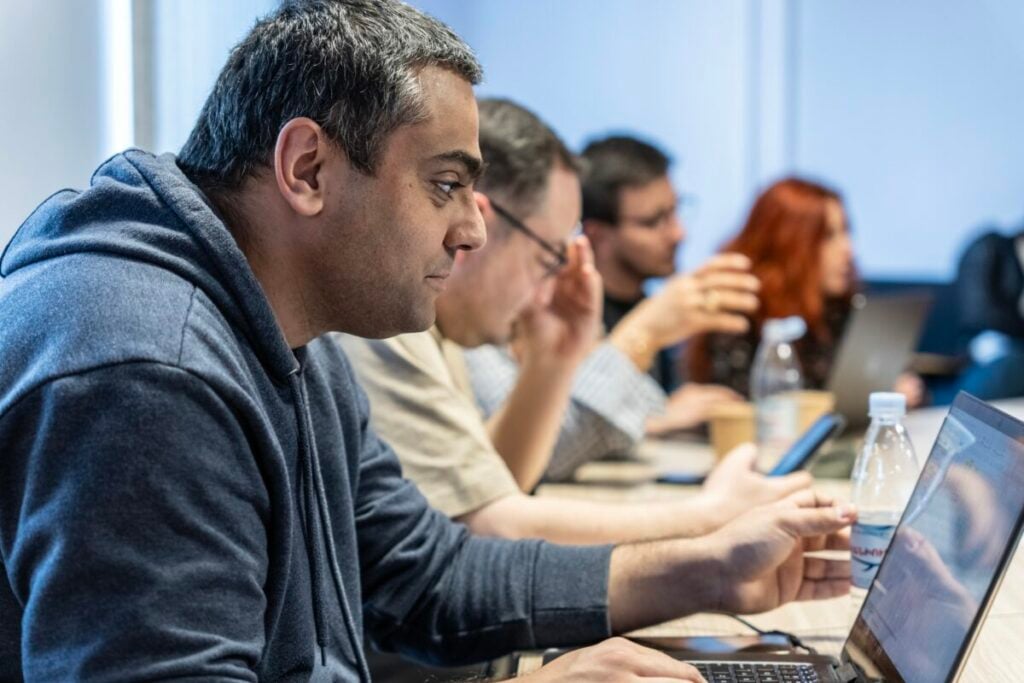
Garik Harutyunyan
Head of Factor TV fact-checking team
During the pre-election period, we expected a rise in disinformation and misleading information, and that is precisely what happened. Therefore, it is essential for individuals seeking verified information to have a centralised source where all the teams involved in fact-checking are gathered. This centralised source is the InFact newsroom.
This platform is not designed to compete with traditional media. Readers can continue to follow their preferred news outlets. The InFact newsroom serves as an additional resource that consolidates publications in one place, making it easier to find information without visiting multiple reliable websites.
I understand that misinformation spreads much faster than verified information. Some falsehoods can be debunked in just hours or even minutes. However, certain claims and information can take days or even weeks to verify. This time delay is the price we pay to ensure the accuracy of the information we share.
It’s essential to pay attention to this platform during the pre-election period for several reasons—historically, misinformation peaks around elections, during wars, and following hunts. A widespread disinformation campaign is particularly marked in this pre-election period. To escape this chaos, some individuals may go to extremes, such as completely avoiding the news. Our goal is to prevent this by encouraging people to engage with verified content. This way, they can make informed decisions when they vote, regardless of their chosen candidate.
This campaign is also diverse in terms of falsehoods. However, we have observed a pattern: political groups tend to spread more falsehoods about their opponents, particularly focusing on issues that are important to those opponents. Additionally, there is a marked trend in how these falsehoods are disseminated: they are often spread intentionally.

Ani Grigoryan
Head of CivilNet’s fact-checking team
During the pre-election period, the volume of disinformation increases and manipulation spreads rapidly. Therefore, there was a need for cooperation to join efforts, increase audiences, and focus on resisting this flow of disinformation.
Different editorial offices provide verified information on a single platform, allowing readers to avoid navigating through multiple websites. By visiting the InFact newsroom, readers can access the work of all six editorial offices in the field of fact-checking. Additionally, having everything on one platform increases access to reliable information, enhances its distribution, and improves the chances of reaching the target audience.
We realise that one of the biggest challenges in fact-checking is time; fake news spreads rapidly, while our verification process is slower. However, our work must be grounded in facts and credible sources. Even after a few days, we can still impact the distribution of false and manipulative news through our articles. These pieces can continue to circulate in the media, be repeatedly cited, and serve as tools to shape public opinion. Addressing misleading information, even days later, can effectively disrupt this cycle.
We provide the reader with grounded facts and explanations, rather than opinions, assumptions, or predictions. The reader can see not only where they are being misled, such as when news is false or manipulative, but also how we uncovered this information, the methods we used, and the evidence we gathered.
During the pre-election period, our work becomes even more important. Consider how rapidly disinformation increases and the tactics some groups employ to influence voters’ choices.
It is critical to debunk these claims thoroughly, and we will continue this work in the post-election period. After reviewing the articles published by CivilNet, I can confirm that the manipulations primarily focus on socio-economic issues, security, and foreign policy. Additionally, there are numerous distorted assertions regarding Armenia’s relations with the West, as well as narratives about war and peace. These misleading claims do not originate from a single source; instead, they spread through semi-anonymous websites and social media, eventually reaching various media outlets. It is very important for us to illustrate this chain of influence and how they try to sway public opinion.
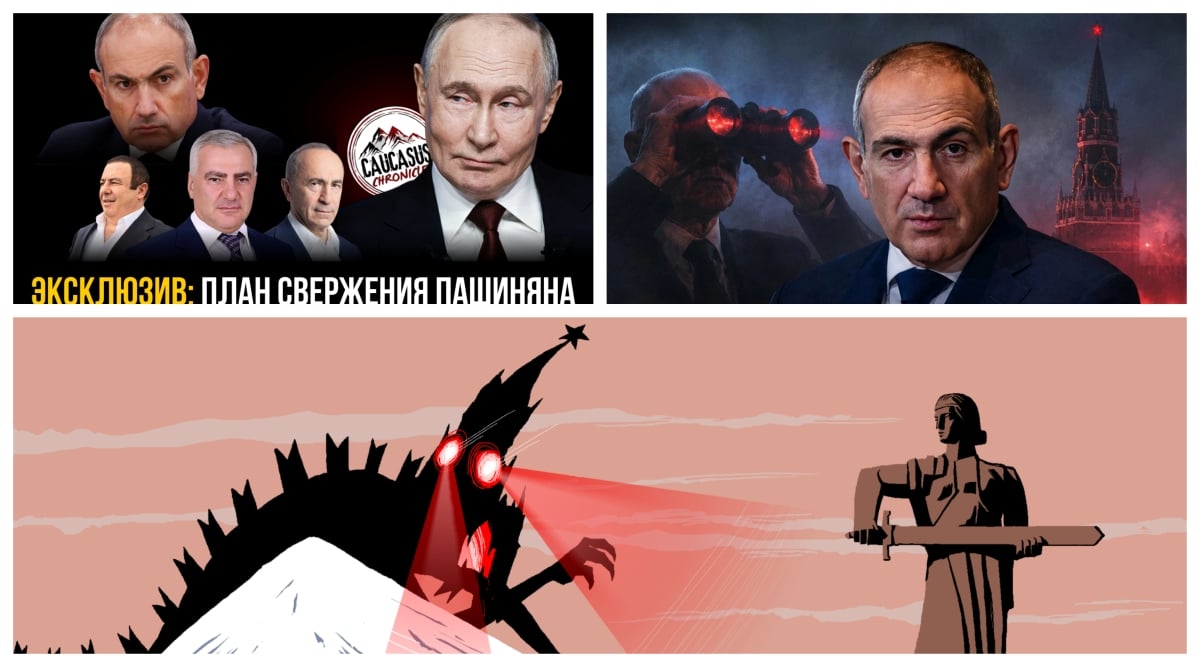
We have also observed characteristics of hybrid warfare, in which not just one piece of disinformation is spread but rather a collection of elements that contribute to a larger strategy. This strategy aims to deepen political polarisation and foster an atmosphere of fear within society.
I am pleased that this initiative has received a positive response from both civil society representatives and the general public.
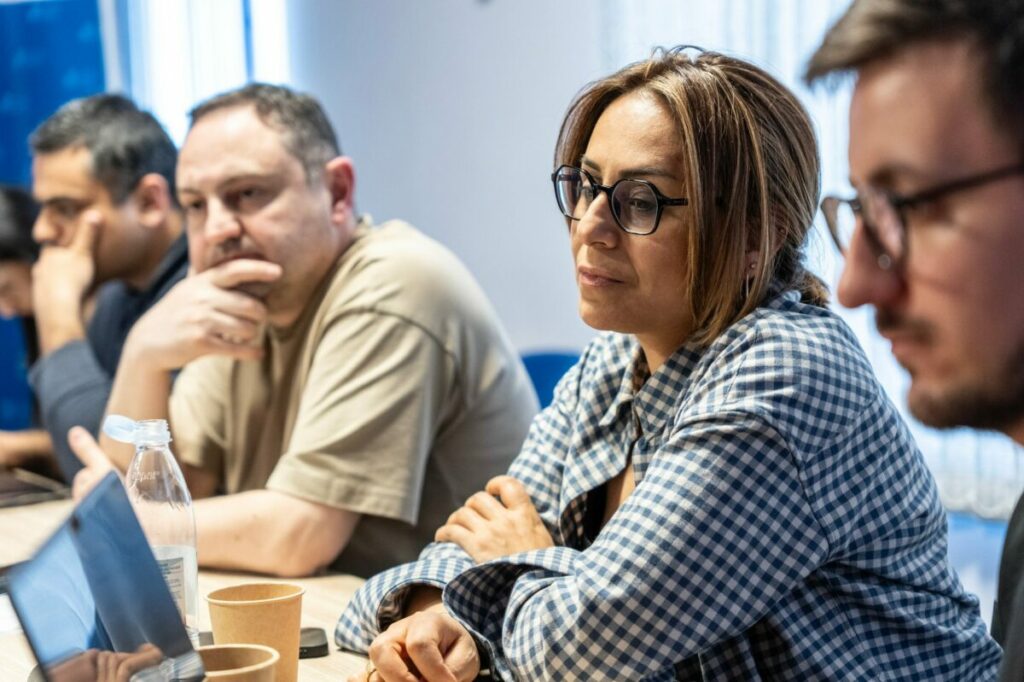
Hasmik Hambardzumyan
Editor-in-Chief of the FIP fact-checking platform
This is our first attempt to unite editorial offices in Armenia in the fight against disinformation. Over the past several months, we have collaborated to monitor and identify disinformation campaigns and false information, while also keeping the public informed about these issues.
Many people struggle to distinguish between facts, interpretations, manipulations, and falsehoods amid the overwhelming noise of information. InFact is important because it brings together various editorial teams to verify specific claims, provide reliable sources, and deliver verified information to the public. There is a genuine need for such a platform featuring dedicated professionals and conscientious specialists in the Armenian media landscape.
Fact-checking is a separate professional domain. The articles on InFact are grounded not in opinion but in rigorous verification. For instance, we take a specific claim, examine various sources, analyse official data and documents, and compare the information before reaching a conclusion. We also often map how dominant narratives or statements are disseminated within a specific timeframe, detailing the channels and methods used. Additionally, we demonstrate to our readers the tools we employ in our investigations, thereby enhancing our credibility.
I understand that disinformation can spread rapidly, while the process of verifying facts takes time. This seems to be an unwritten rule in our field, and I personally disagree with it. I truly regret that it works this way. For us fact-checkers, it is both challenging and frustrating that verified information often reaches the reader too late. It feels unfair that people receive false or misleading information and have to live with that inaccurate perception.
However, we think that both speed and accuracy are important here. If a journalist needs to verify a document, official data, the origin of a video, or any source, it may not be possible to do so in a few minutes. To have accurate and comprehensive information, one should not rush; it takes time.
Even if a rebuttal is published later, it remains important because false claims often continue to circulate. Furthermore, the verified material serves as a valuable reference for journalists, experts, and citizens. In other words, it not only has an immediate impact but also helps prevent the same manipulation from recurring.
This work is particularly crucial during the pre-election period, as information flows are high. The risk of disinformation increases as political forces, propaganda groups, and other interested actors seek to influence public sentiment and opinions. At that point, even a single fake story, a distorted quote, or a manipulated statistic can shape voters’ perceptions.
The platform will remain active for some time after the elections because fact-checking is essential beyond election periods. In the post-election phase, it is important to monitor political statements, claims about election results, potential manipulation, and other topics of public significance.
When discussing the content, we have observed that manipulations frequently focus on issues related to relations with the EU, electoral processes, the country’s security, and the socio-economic situation, as well as topics surrounding war and victims. These subjects are sensitive, making them often used to incite public fears or mistrust. Most false information circulates about the prime minister and his inner circle.
The sources of misinformation are different and include politicians, political party circles, bloggers, Facebook pages, Telegram channels, media outlets, and sometimes foreign or foreign-influenced information networks, as well as bot accounts. The spread of these claims follows a specific mechanism: they often begin on smaller pages and then are disseminated to platforms with larger audiences. This process is frequently systematic, giving the impression that everyone is discussing the same topic.
We also notice publications characteristic of hybrid warfare. These publications often aim to discredit state institutions, deepen societal polarisation, spread fear, and present false narratives, while creating a manipulative image of Armenia’s foreign policy and elections.