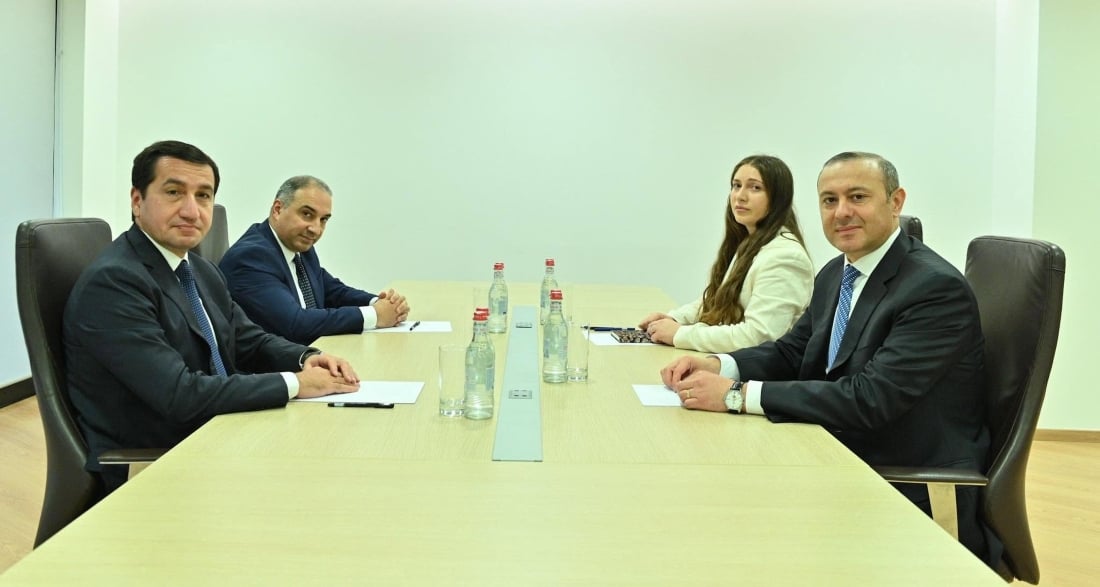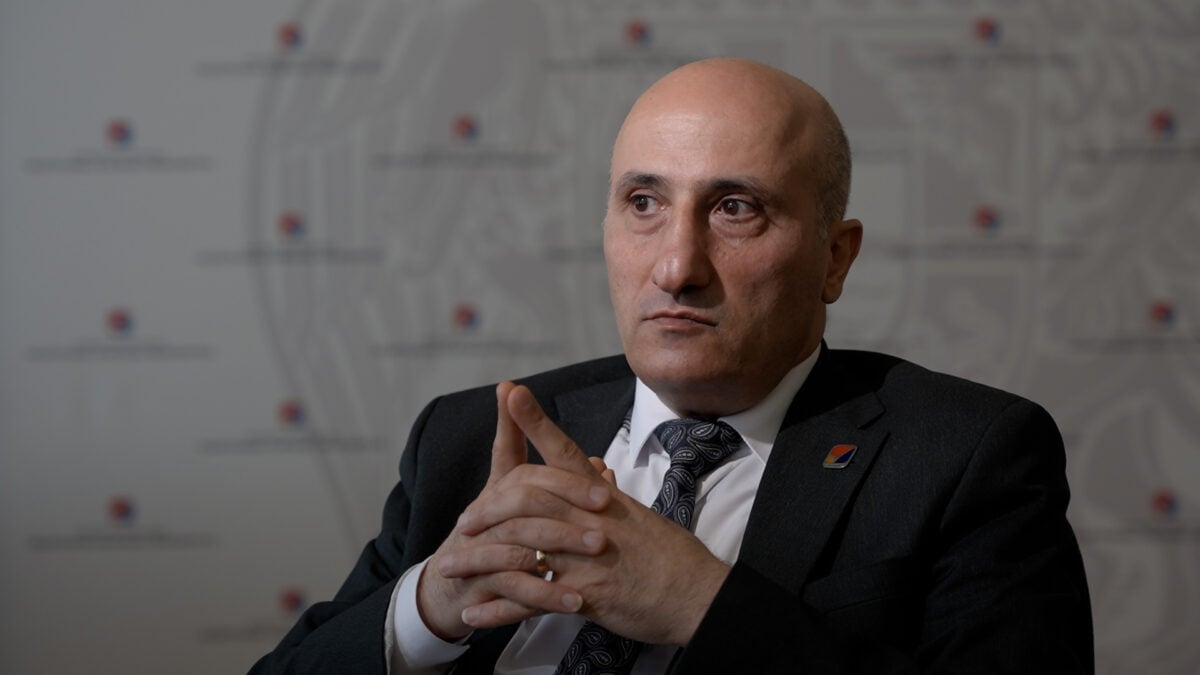
Twenty days after the official start of the pre-election campaign, we interviewed Vahagn Hovakimyan, the Chairman of the Central Election Commission.
At the beginning of the conversation, Hovakimyan smiles as he recalls the last press conference held by the Central Election Commission (CEC). Instead of delivering an opening speech, he decided to show an 8-minute video clip before the question-and-answer session. The video outlined the “dos and don’ts” during the pre-election campaign.
“Two or three journalists just left,” says Hovakimyan.
Why?
He replied, “I don’t know. Ninety percent of active journalists did not attend the training courses organised by the CEC for journalists. Yet, they will still write about the alleged violations, often without realising that many of these are not actually violations of the electoral code.”
There’s an unchanging issue I noticed twenty years ago, when I was a journalist myself: many journalists do not thoroughly read the Electoral Code. They often mistake unpleasant phenomena for electoral violations. For instance, we respond to their reports by instructing the removal of illegally posted election posters. However, in the same article, they may also label legally posted posters as violations. The urgency to publish materials quickly often prevents them from working thoroughly and accurately.
Do you think urgency is the only issue?
The media is one of the most influential tools for shaping the political agenda. It is natural for journalists or editorial staff to interpret events through the lens of their own political views. However, when news activities are conducted to serve specific political interests and the arguments presented are incorrect, it undermines the credibility of the media outlet. As the Chairman of the Central Electoral Commission, I am a media content consumer, and accuracy is critical for me as a public official. When I identify a substantiated issue, I follow up on the publication to address and correct it.
What do you think about the fair distribution of airtime and the quality of coverage?
As of yesterday, we have received only one complaint from the Armenian National Congress party concerning the editing of a segment of an interview aired on Public Television. We will request clarification on this matter, as candidates’ words should not be edited or cut at this stage.
Generally, election campaigns, particularly during the NA elections, are tense affairs. In a society where the press is free, people can express themselves and compete openly for parliamentary positions, including striving to form a majority. However, a lack of freedom often results in a dictatorship where everyone’s voices are silenced. Since our country is free, it is natural for tensions to arise during these campaigns. In an emotional state, candidates may resort to insulting one another, an unfortunate, yet inevitable downside of this freedom.
I assure you, visit countries with long-standing democratic traditions during election campaigns and you’ll see all kinds of things. Candidates say just about anything to each other.
Twenty years ago, the public experienced political campaigns through the lens of journalists. Today, everything unfolds online in real time. This shift allows greater freedom, enabling people to see politicians express their emotions rather than present a “sterile” image. This is what democracy is about: witnessing a person from all perspectives and ultimately making a free choice.
Have you seen the pre-election campaign videos created by AI? They exploit the fears, anxieties, and emotions of the public.
To be honest, I don’t have enough time to see everything, but every political force and party struggles to convince people to vote for them. The question regarding what content a political force uses to attract votes is complex, and I will be cautious here. Once we start discussing the acceptability of the content, we risk becoming censors. Freedom comes with a cost. As soon as we evaluate this issue through our upbringing and perceptions, we begin imposing restrictions on speech. The law prohibits insults, slander, and the promotion of violence or terrorism. In cases of disinformation, organizations should deny it or take legal action. Restricting speech, even with good intentions, can lead to a classic dictatorship.
Mr Hovakimyan, will the issue of campaigning on social networks during the election silence period not be resolved this time either?
We have decided to impose an administrative penalty this time. This means we will identify the media outlets or well-known individuals involved and impose fines on them. For instance, during the Gyumri Council elections on March 30 of last year, several media outlets completely violated the days of silence: the day before and the election day. A media outlet cannot operate outside the law and then accuse officials of illegal conduct. If a media outlet does not respect the laws of the Republic of Armenia, it should consider closing its editorial office and pursuing a different line of work.
How will you impose the penalty?
We will try using monitoring tools. I am not saying we will achieve 100 percent success. Monitoring individuals is particularly challenging, but it should be effective for media outlets.
How much is the fine?
If I am not mistaken, 300 000 drams.
What do you expect from election day coverage?
I expect the media not to engage in political propaganda. If you see a problem, of course no one is saying not to report it. But when you do so while emphasizing the name of a political force and presenting it in a negative light, you are already engaging in indirect counter-campaigning. The tools to report responsibly are available; journalists should refrain from naming political parties involved in the elections until 8:00 PM. For example, some journalists go to polling stations to serve their own political interests and provoke disputes. I do not consider that journalism, yet they still enter polling stations with press credentials, provoke arguments, film them, or livestream them online. If, on June 7, journalists focus solely on journalism instead of advancing their political views, they will make the greatest contribution to increasing the legitimacy of the elections.
Let them take a pause for one day. Let Armenian citizens make their choice calmly. Let them stop inflaming tensions and stop agitating people on that day.