The world’s press freedom index has reached its lowest level in 25 years.
The 2026 Press Freedom Index published by Reporters Without Borders (RSF) presents a concerning picture: for the first time, more than half of the countries worldwide fall into the worst categories for press freedom, labelled “difficult” or “very serious.” RSF evaluates the press situation using a five-tier scale: “good,” “satisfactory”, “problematic,” “difficult,” and “very serious.” This year’s results indicate a global decline in press freedom.
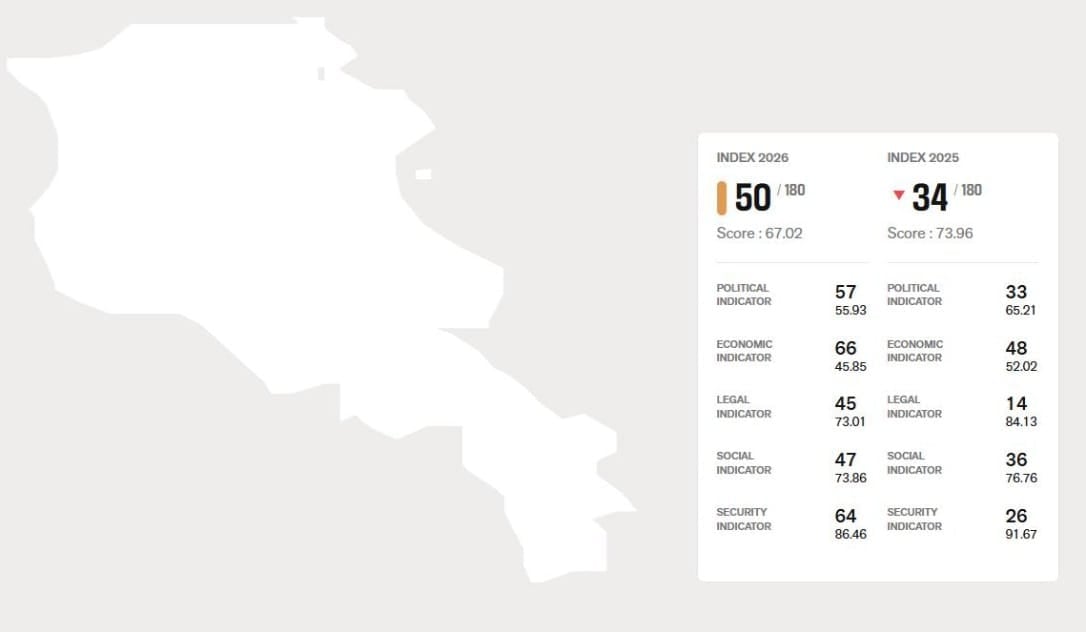
Press freedom in Armenia has significantly declined, dropping to 50th place among 180 countries this year from 34th last year. Armenia is now categorized as a “problematic” country.
The report states that the environment for press freedom in Armenia continues to be shaped by deepening polarization, disinformation, and the growth of hate speech. At the heart of all this are both domestic political issues and regional and global processes.
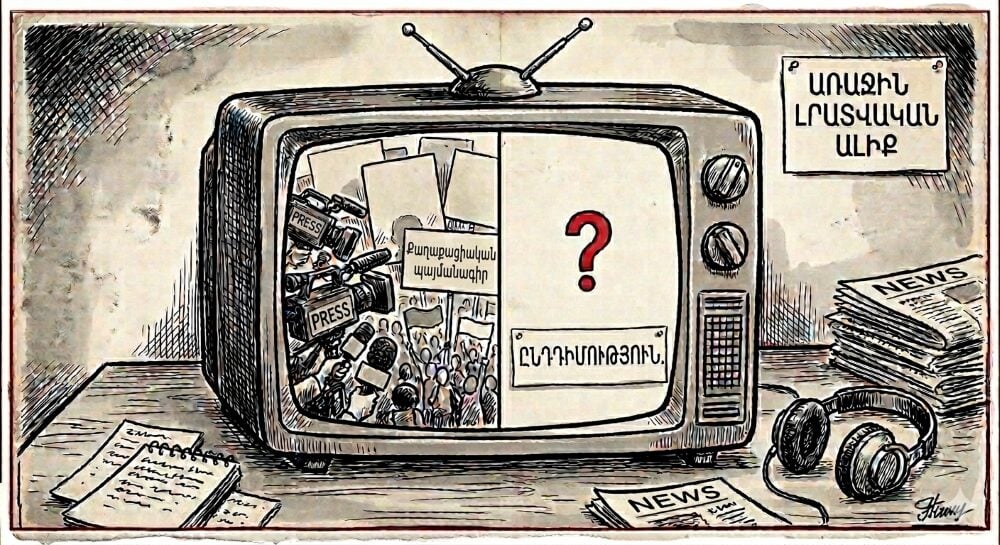
The report indicates that most broadcast and print media in Armenia are still influenced by political and commercial interests, which puts pressure on their editorial policies. As a result, media polarisation mirrors the political landscape.
Independent editorial offices, such as CivilNet, Hetq, Factor TV, and Radio Liberty, play a crucial role in democracy by performing essential oversight work. According to Reporters Without Borders (RSF), the number of these offices remains limited.
The international organization observes that, while some changes have been made to the legal framework, the legal norms governing the sector still fail to protect press freedom adequately and do not comply with European standards.
They noted that the problems of combating disinformation and of judicial restrictions on information publication remain unresolved. Refusals, delays, and other barriers often hinder access to state information.
“The economic environment does not support media independence. Most media outlets are controlled by individuals affiliated with political forces or funded by influential figures. Paid subscription models are rare, and the advertising market is underdeveloped, both of which limit the financial independence of private media outlets. Additionally, state-owned media avoid criticising the government, as stated in the “Press Freedom Index 2026” report.
The international organization has raised concerns about the safety of journalists in Armenia.
Journalists frequently face pressure, insults, and violence from both government and opposition groups, as well as their supporters. They often become targets of hate speech, which exacerbates self-censorship within the industry.
Despite falling back 16 places from last year, Armenia continues to lead the region in press freedom. Among neighbouring countries, Georgia ranks 135th, Azerbaijan 171st, Turkey 163rd, Iran 177th, and Russia 172nd.