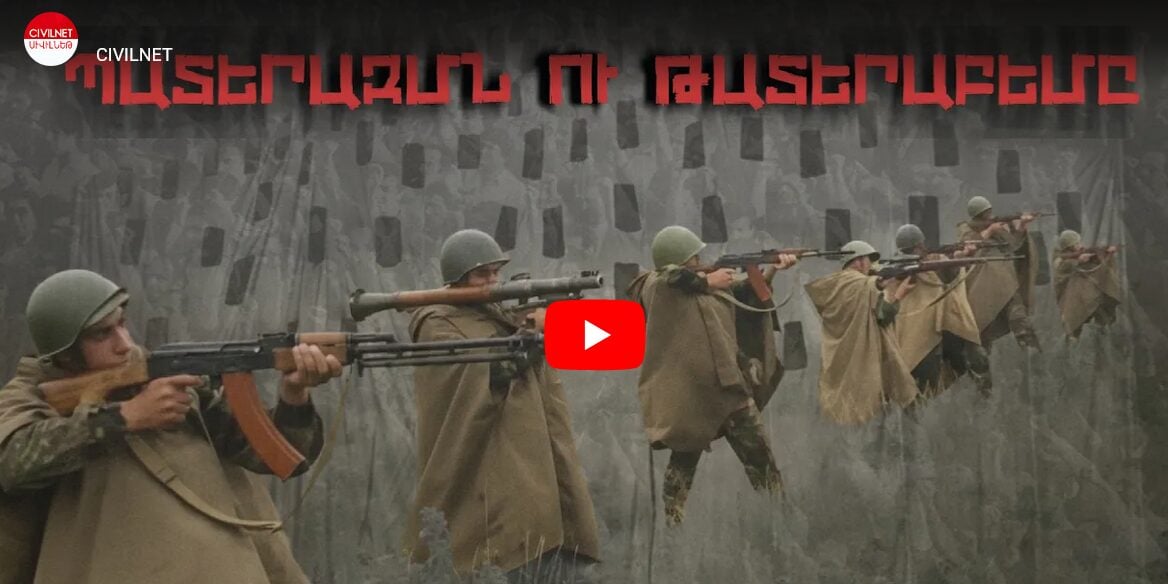
Civilnet journalist Hasmik Hovhannisyan created a 30-minute film about cinema, theater, and literature that reflects on the Artsakh wars. The film is titled “War and the Stage.” She does not consider it a film, though, but rather a long reportage.
“There is something unfair about making a film about the war. I create beautiful material, someone else edits it beautifully, and they write positive comments. Yet, it is all based on the suffering of victims and the grief of mothers who have lost their sons,” she says.
Hasmik began her work three years ago. She explained, “Within a week, it became a 5-minute reportage, but then it got longer. I took a break for six months because the topic was sensitive, and I couldn’t finish it immediately.” However, the question that sparked this reportage predates the 44-day war: Is it possible to create a film about war while eyewitnesses and their descendants are still alive?
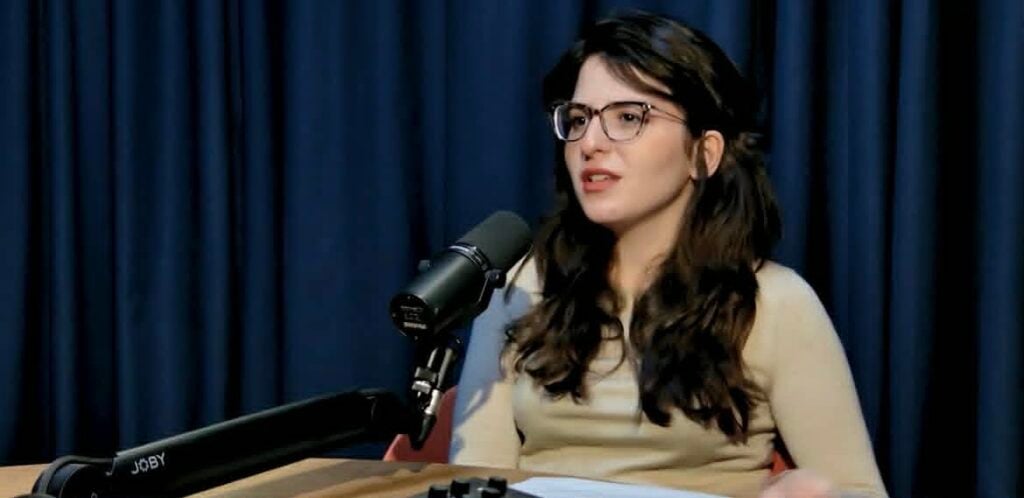
Hasmik Hovhannisyan
The reportage is structured in three parts: the First Artsakh War, the Four-Day War, and the 44-Day War. Until the 2000s, no films were produced and no plays staged about the First Artsakh War. Instead, it was documented by photographers Ruben Mangasaryan, German Avagyan, Zaven Khachikyan, and Hakob Poghosyan. The first complete literary work about the war was published in 1999 by Levon Khechoyan, titled “Black Book, Heavy Beetle.”
In the 2000s, the first feature films about the war were produced, including “Be not Afraid” and “Life and Fight.” These films conveyed clear messages. The well-known Sahakyan cartoon series “Kildim” is also mentioned, portraying Azerbaijanis as unsuccessful, uneducated, and cowardly characters.
Fourteen documentaries have been produced about the 1990s war. Among these is the film “Human Stories in the Days of War and Peace” (2006), which has won 20 international awards. In a conversation with Hasmik, the director, Vardan Hovhannisyan, stated, “Society and the leadership wanted to forget about the war.”
Since the 2000s, a new generation of writers discussing the war has emerged. Notable authors include Aram Pachyan with “Farewell, Bird,” Karen Antashyan with “To Private Martirosyan,” and Hovhannes Ishkhanyan with “The Day of Uvalnyat.” According to the journalist, these works represent “the most provocative texts” on the subject.
Hasmik notes that “those who tell about the last war tell about themselves.” In this segment of the report, we find works that have unfolded before our eyes. The emotions of pain, fear, and hope have transformed into books and films that reflect our experiences. Among these are Shoghakat Vardanyan’s “1498” and Nikolay Stepanyan’s “Where.”
As for literature, the author says, “it has become blurred and moved to Facebook.” In the reportage, her interlocutor, literary critic Arkmenik Nikoghosyan, asks a thought-provoking question: “The war was not experienced solely by those who fought. Everyone witnessed it through videos, so what else can a writer write?”
From 2022 to 2023, 5 of the 24 films produced centered on the theme of war. As for theaters, there are very few plays on this topic in their repertoires.
Before the recent 44-day war, the Sos Sargsyan National Theater staged “The Genesis of Victory,” a play about the 1990s war. Two actors from the cast, Varsham Gevorgyan and Arman Navasardyan, participated in the 2020 war. They revealed that after experiencing real war, it had become difficult for them to act again. Initially, they were hesitant to take the stage, but ultimately decided to perform without altering the original production. “I did not feel any discomfort while watching that performance because the actors have firsthand experience of war; it is not merely acting,” says Hasmik.
The extended reportage “War and the Stage” received many positive responses but also drew some criticism. Some viewers remarked that certain films had been forgotten and that some important books were not included. This feedback indicates that a significant and meaningful effort has been made: the work produced over thirty years has been gathered in one place, making it easier to recall and identify what may have been overlooked.
The reportage also provides insights into the relationship between war and culture beyond Armenia. The prize intended for Palestinian author Adania Shibli at the 2023 Frankfurt Book Festival will not be awarded in solidarity with Israel.
“Waiting for Godot” was filmed in Sarajevo, a city that was under siege during the Bosnian War. American writer Susan Sontag directed the film. This artistic response to adversity later became known as the Sarajevo Cultural Resistance.
“The only thing that can be done after the war is to remember the pain,” says Hasmik.