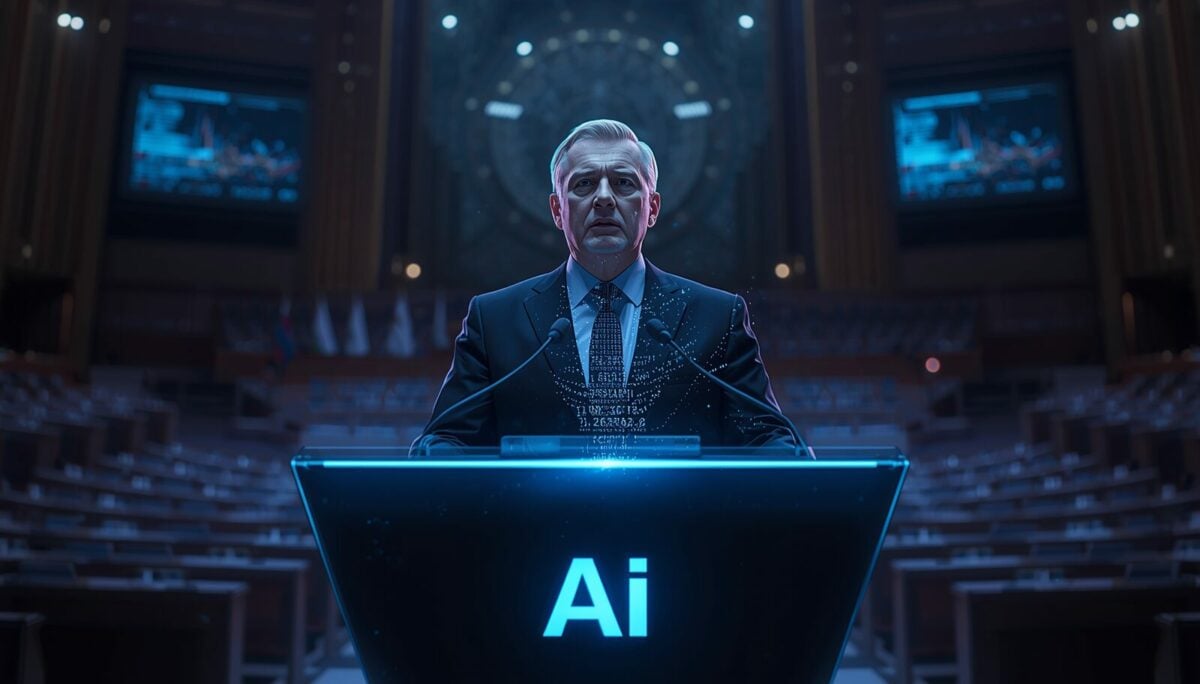
The 2026 parliamentary elections are expected to be unprecedented in terms of content, technological, and creative solutions. The rise of artificial intelligence (AI), which has the potential to spark a global industrial revolution, has found a unique application in Armenia. The “Strong Armenia” party, led by businessman Samvel Karapetyan, has gained a reputation as the main opposition in Armenia. They are using artificial intelligence-based technological solutions to promote their leader and party. However, it’s important to note that this use of AI is not exclusive to the opposition; there is also a significant amount of AI-generated content supporting the government on social media networks.
It is noteworthy that Samvel Karapetyan’s legal team has managed to deliver their leader’s messages to the public, despite him being under house arrest, by exploiting the existing gaps in the law. Although Karapetyan is subject to court-imposed restrictions on public speech, AI-generated speeches and videos attributed to him are being circulated online. The first time this happened was during the congress of the newly established party, which they proudly labeled as “The First AI Speech in History.” The video was clearly marked as AI-generated. This was not an isolated case, as the following video was also AI-generated.
Public suspicions arose regarding Samvel Karapetyan’s recent speech, with some claiming it was AI-generated as well. However, there was no evidence to support this claim. A fact-checking platform examined the video using several tools and concluded that it was most likely not AI-generated, thereby providing no grounds for such a claim. Additionally, Aram Vardevanyan, the second candidate on the “Strong Armenia” party’s list, confirmed that the content was not AI-generated and stated that he “was personally present at the filming of the message.”
On social networks, particularly TikTok, the regulations regarding content, targeting, and abusive materials are not as stringent as those on Facebook and Instagram, which are owned by Meta. Consequently, TikTok is swamped with propaganda videos that frequently include profanity and hate speech, many of which are AI-generated. One could say the platform is flooded with such content. Both the government and the opposition are using various content strategies to target one another. Both sides are actively employing technological tools, with social media emerging as a powerful means of shaping public opinion in pre-election Armenia. This trend is not surprising; throughout history, from the invention of writing and images to the development of radio, television, and, now, the Internet and social media, politicians and political parties have consistently sought to adopt and use new technologies.
Paradoxically, the use of new technologies is particularly crucial for the opposition. Their speeches and performances are inherently less interesting than those of the government. However, the opposition can make up for its lack of resources by embracing technological innovations, since it has little to lose.
Young John Kennedy, the US presidential candidate, defeated Nixon through his skilled, dynamic use of television. Similarly, Democratic candidate and US President Barack Obama effectively leveraged social media. This pattern of utilizing new media in campaigns has a long history in the United States. For instance, President Andrew Jackson used inexpensive newspapers that were quickly disseminated in the 1820s, while Franklin Roosevelt harnessed the power of radio. By the 1930s, politicians from both the left and right around the world were actively combining radio and film in their campaigns. As a result, the media began shifting away from text and placing greater emphasis on visual content.
However, it’s different when the politician exists only as a virtual character, lacking a real connection with voters, society, or even teammates.
With just over a month remaining until the elections, the pre-election campaign is in full swing. However, the main opposition’s declared candidate for prime minister, Samvel Karapetyan, remains largely absent from the public eye. Due to legal restrictions and technological methods to bypass them, he has effectively become an AI candidate. The people-voters-public lack the opportunity to engage in dialogue or to understand his true identity. While his party’s registration remains unrestricted, the limitations on the party leader’s public speaking have raised legal and public concerns. As a result, we only have a virtual image of this political figure ahead of the upcoming NA elections. However, this primarily harms democracy and the public interest, as a political actor who has entered the political arena does not participate in debates and remains inaccessible. As voters, we have not heard his natural, unedited speech; we know nothing about his emotions or reactions, nor about his ability to debate, engage with people, or function as a public figure.
Ultimately, if the Armenian court does not lift the restrictions on public speech and house arrest, while the political force he leads participates in the parliamentary elections, voters will be left to choose a figure who exists online, operating in a virtual mode and “speaking” to them through AI. This candidate, operating in a virtual realm and communicating through AI, symbolizes the height of media and communication, effectively representing the absurdity of our technological, internet-driven era.