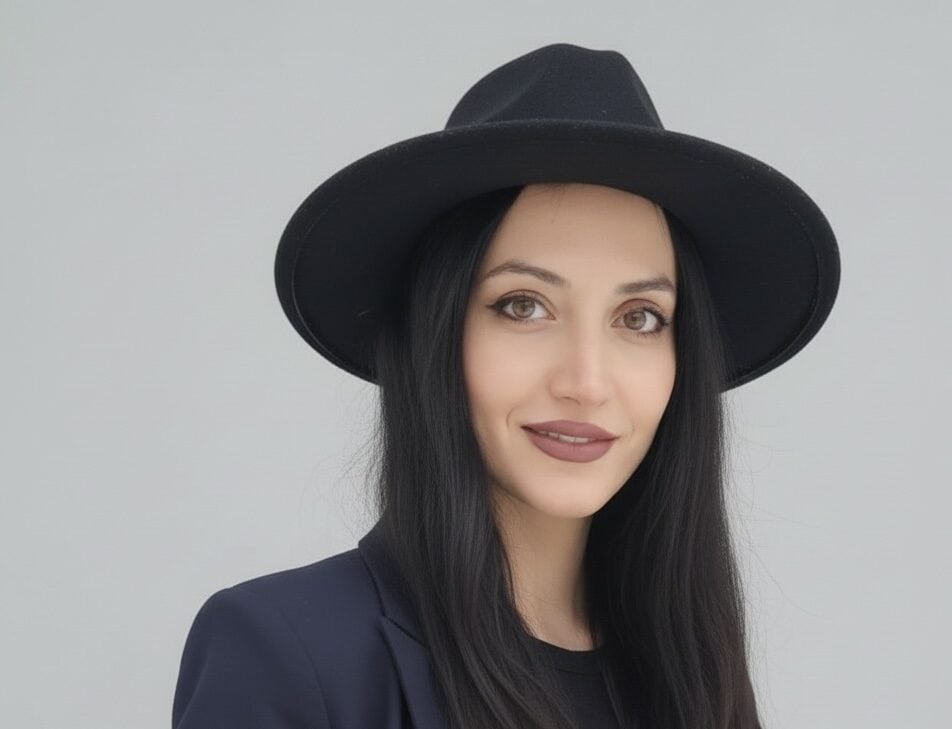
Lilit Barseghyan is a journalist, documentarian, and AI artist. Her low-budget, AI-powered film, “Unknown Artefact,” won the Best AI Film award at the AI International Film Festival in Los Angeles in December 2025.
How did she transition from journalism to cutting-edge technology? How did she get artificial intelligence to sing the songs of Kuchak? And will AI kill traditional cinema? We spoke to Lilit Barseghyan on these topics.
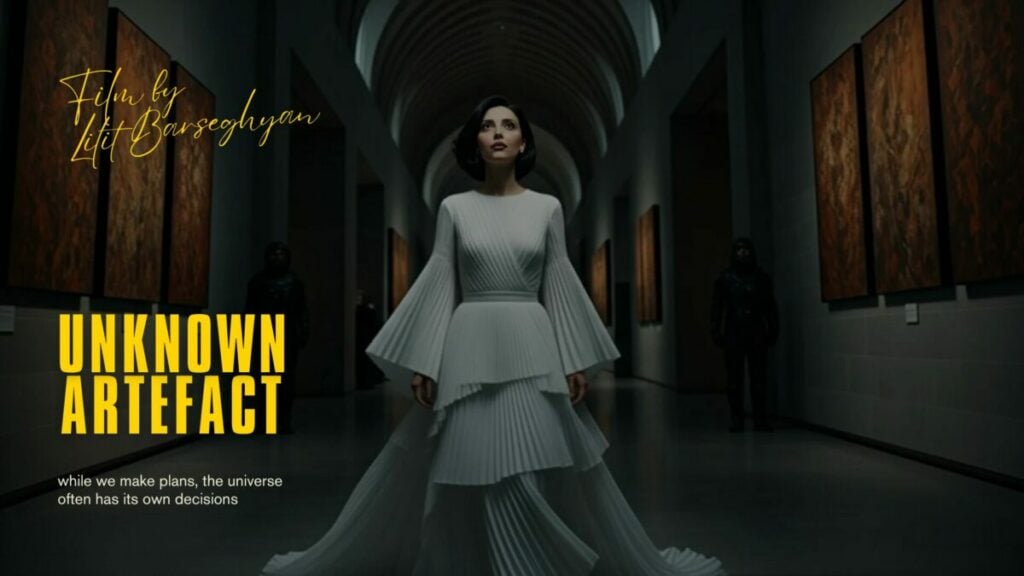
The poster for the movie “Unknown Artefact”. Photo by Lilit Barseghyan
Before stepping into the world of AI, you worked in journalism and documentary filmmaking for many years.
I am a journalist by profession. I began my career at Yerkir Media, where, despite limited resources, I was encouraged to “think big.” It was there that I discovered my passion for experimentation. Rather than competing with others, I focus on creating new standards that set my work apart. After my time at Yerkir Media, I worked at Shant TV, then moved on to the morning program at the Public Television Company, and eventually transitioned to the documentary film department. During this period, I immersed myself in a different world: spending nine months studying the life of one individual, delving into archives, and uncovering “top secret” documents. This experience taught me that a television film holds lasting value, serving as an archive for future generations.
During those years, collaborating with “Bars Media” on the “Mysteries of Armenia” film series was a significant experience for me. It felt like receiving a marriage proposal from Luc Besson. I learned what true teamwork looks like, where everyone acts according to the director’s instructions.
Artificial intelligence is reshaping the rules across all fields. How did the transition from documentary filmmaking to the world of AI take place?
My dream in filmmaking was to make a feature film. At the time, though, I understood that this was still out of reach. Together with a friend, I had opened a photo studio, was making reels, and was working on various projects. At the same time, I was trying to learn animation, which proved very challenging. There was too little time and too much to do, and nothing seemed to work. Eventually, I started to feel completely “insufficient.” During that period, I received an offer from reArmenia to join their team as a reel maker. They were just beginning their AI courses at the time. I realized then that I had a choice: either drop everything else and commit to AI right then and there, or never do it at all. I turned down all the projects I was working on and joined the reArmenia team.
At first, I felt like a “loser” in the group; the younger team members were experimenting with every tool possible, while I didn’t know how to use any of them. What I did have, though, was intense focus. I bought my first AI tool, Runway, and started learning. About a month later, I received my first order and created a 3.5-minute animated clip. I was amazed that I had produced an animation that only months earlier had seemed impossible to me.
Your AI-created film “Unknown Artifact” won the “Best AI Film” award at the AI International Film Festival last December. How did you turn your dream of creating a feature film into reality with the help of AI?
I had written the script for that film quite a long time ago. But every time I thought about what it would take to shoot it, I felt overwhelmed. That’s when I decided to make this very film using AI. I’m usually very protective of my scripts, but this time I chose to trust the bot and worked with Gemini to develop the structure. The story revolves around a talented art curator who doubts her own abilities. In an effort to leave a lasting legacy, she begins to fabricate her reality, leaving “traces” of her existence in various corners of the world. The film explores themes of greed and unfulfillment against an apocalyptic backdrop, culminating in the year 2100.
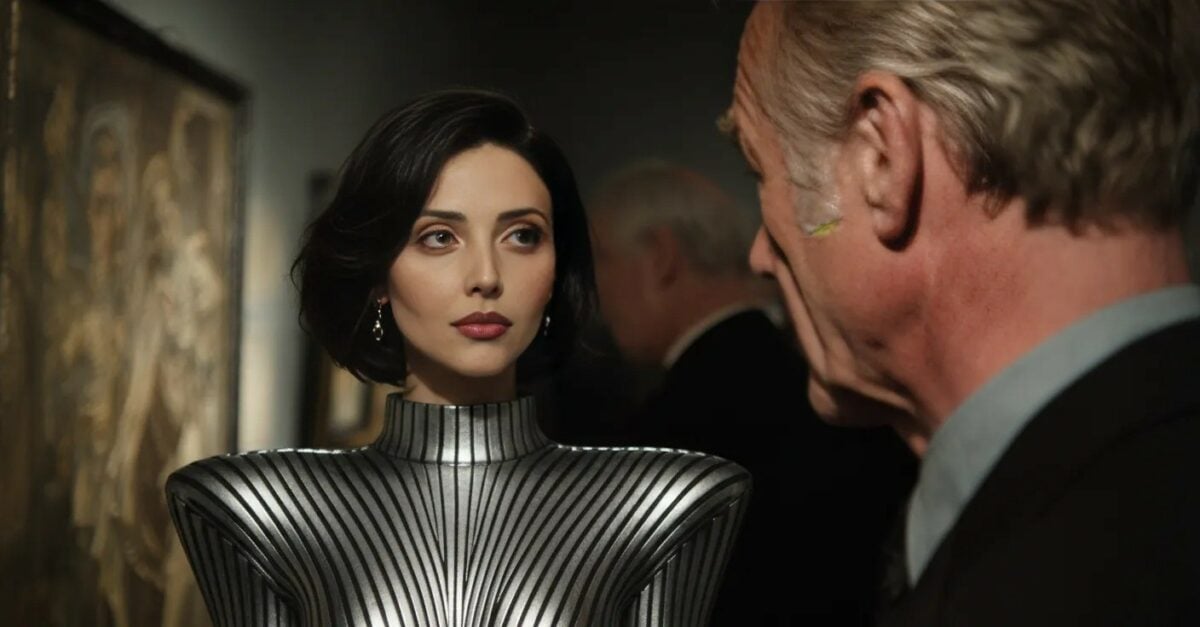
Still from “Unknown Artifact” by Lilit Barseghyan
How much time and what kind of resources did the film require?
The actual process of generating the film didn’t take very long, but I spent quite a lot of time working on post-production. I created the main character using my own facial features and face as a reference. For the other characters, I purchased licenses to avoid copyright issues. In total, I used ten different AI tools. While filming typically requires payment for actors, crew members, travel, and location rentals, creating this film with AI required only subscriptions to the tools. Overall, that expense was less than the cost of renting a professional camera for a single day.
The film is in English, but during the most intense scene of the apocalypse, I wished to experience it in Armenian. In that moment, a song I generated based on one of the Hayrens by Nahapet Kuchak plays. Most of the music in the film was also generated using AI, except Johann Sebastian Bach’s St. Matthew Passion. For other scenes, I described the harmonic structure of Alfred Schnittke’s Faust Cantata to the AI, set the tempo, and specified the timbre of a German female singer’s voice, and that’s how I arrived at the sound I wanted. For the melody itself, I sang an Armenian lullaby.
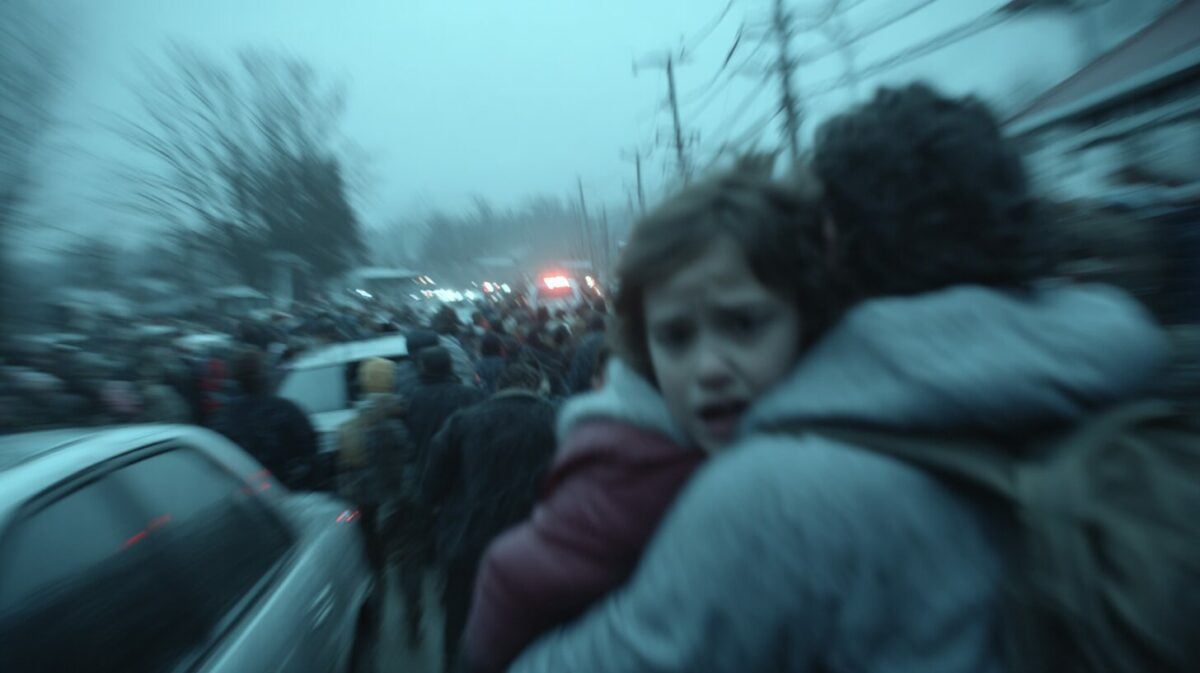
Still from “Unknown Artifact” by Lilit Barseghyan.
The film was produced by Mane Mkrtchyan-Arzumanyan, an art critic and art manager, who also initiated its presentation at various festivals. It was decided to participate in the AI International Film Festival in Los Angeles, a festival that has already earned a strong reputation in AI filmmaking. Films from China, the United States, and Germany were among the entries. On the day of the awards ceremony, as I watched the films presented via Zoom, I felt that I had no chance of winning. The competing works were technically impressive and featured high-quality visuals. So, when I heard my name announced during the awards ceremony, I couldn’t believe it. I had been waiting for an official letter confirming that my film had been recognized as the “Best AI Film,” and only 4-5 days later, that letter arrived. Most significantly, this was not just my personal victory, but a victory for Armenia. We have shown that we can compete globally in the AI industry.
There is a growing debate over whether AI tools will replace people in certain fields, including filmmaking, with claims that AI could replace actors, cinematographers, artists, and other professionals involved in the production process.
I don’t believe AI will ever replace a real artist. On the contrary, I think the value of live performance, of real actors and direct interaction with audiences in theaters, will rise sharply. People will eventually tire of flawless digital images and begin to crave genuine, lived emotion, even if it is imperfect.
AI, however, is an excellent tool for planning work and for creating in animation or fantasy genres. It simplifies many processes and saves resources. For example, directors can use AI to create a film teaser, present it to producers, secure funding, and only then move on to shooting the film.
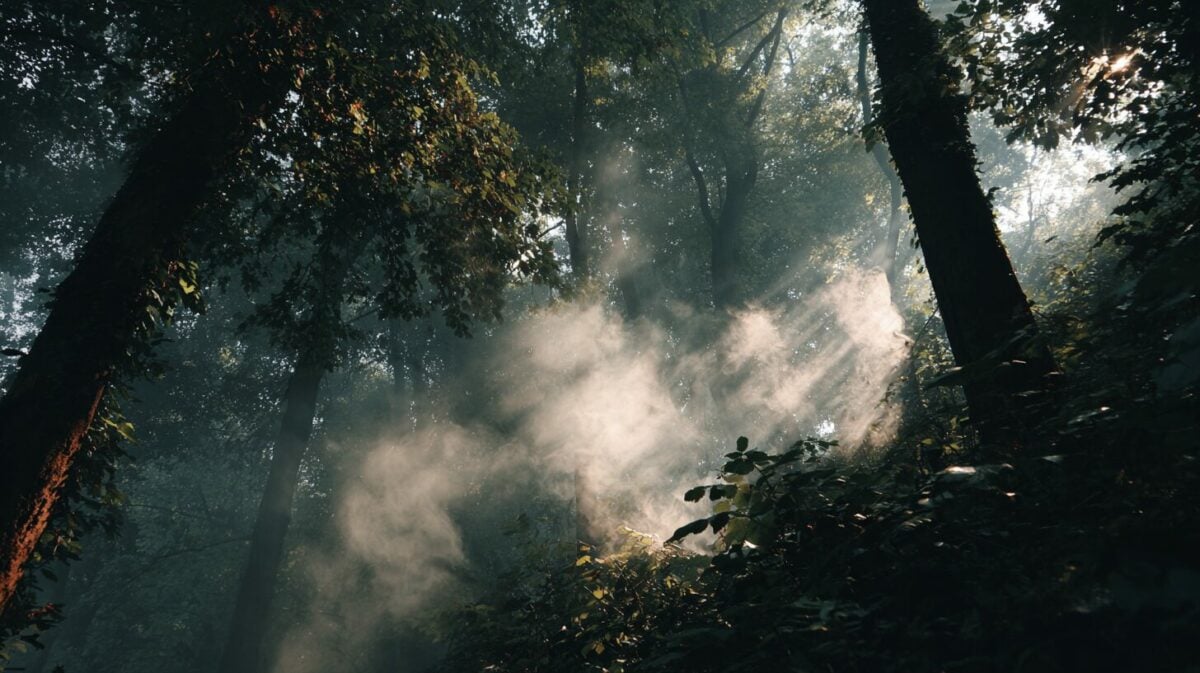
Still from “Unknown Artifact” by Lilit Barseghyan.
After the success of this film, are there plans to generate other movies?
I have many scripts that have been sitting on the shelf for years, and I’ve now decided it’s time to bring them to life. I feel more confident and better equipped than ever to do that.
At the reArmenia Academy, we are also launching a video generation course together with Vahan Setoyan, the editing director of my film. The course will cover the entire process from scriptwriting to editing and post-production.
I want to emphasise that I only started working with AI in May. In less than a year, I’ve already seen tangible results. I hope this serves as motivation for anyone hesitant about change or learning new skills.