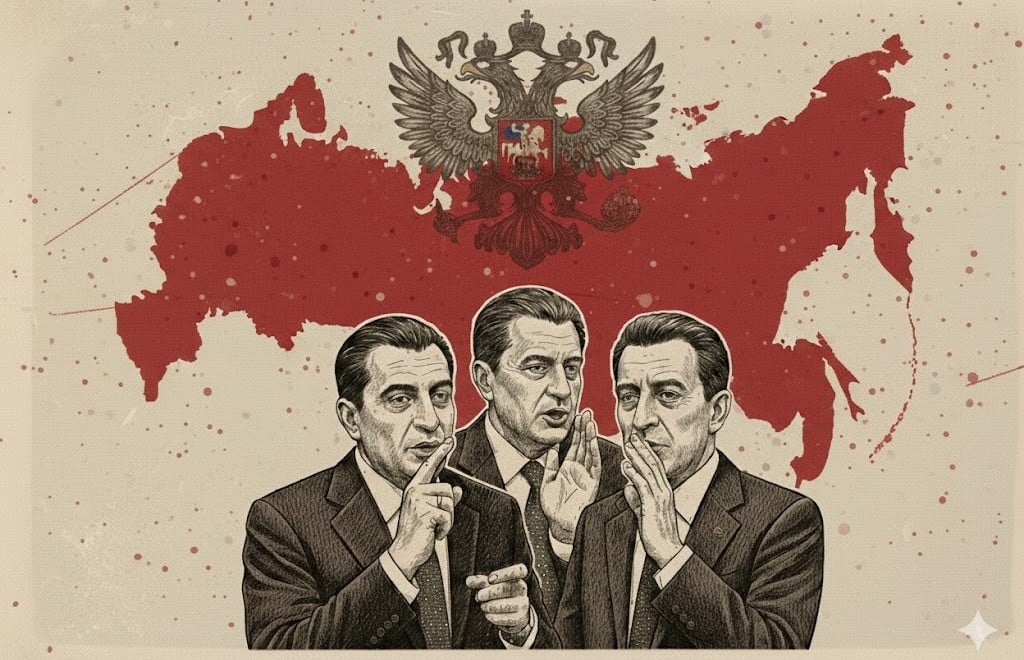
One tactic employed by Russian state propaganda is to enlist Western journalists and bloggers to disseminate its narratives. Often, information reported by foreign journalists mirrors the Russian agenda. For instance, Media.am’s fact-checking team “Verified,” recently published an article revealing how non-Russian, pro-Kremlin journalists contributed to the spread of disinformation about the Armenian justice system.
This article presents similar cases from other countries where foreign authors promote Russian propaganda.
What we know about this tactic
Following Russia’s large-scale invasion of Ukraine, numerous platforms reported on individuals residing in the West who are actively campaigning for the Kremlin (1, 2, 3).
In the context of the war in Ukraine, the spread of fake news occurs as follows: individuals posing as journalists or researchers of foreign origin disseminate false information. This misinformation is quickly picked up by Russian state television channels and shared across various platforms. These individuals often serve as sources for Russian media outlets.
The TV channel “Nastoyaschee Vremya” reports that these individuals primarily work for Russian media outlets, have relocated to Russia, or do not qualify as journalists. The information they disseminate is generally debunked by fact-checking journalists.
One such author is Adrien Bocquet, who presents himself as a French military figure and has been spreading numerous false claims in the context of the Russia–Ukraine war since 2022. An investigation by the French newspaper Liberation found that Bocquet, often described in the media as a former commander in the French army, fabricated both a significant part of his purported humanitarian trip to Ukraine and his military biography. According to the investigation, he was never a commander, never served in a medical support unit, and spent less than two years in active military service overall, mostly in logistical roles.
Ukrainian “FreeDom” has observed that certain journalists frequently spread conspiracy theories and fake news.
In 2023, U.S. intelligence revealed that Russia has been conducting coordinated propaganda campaigns in the United States through agents. According to the findings, these agents target unsuspecting Americans by establishing personal relationships. After gaining their trust, they begin feeding them information favorable to Russia. Without realizing that they are being influenced as part of a pre-designed operation, U.S. citizens then disseminate Russian narratives under their own names. As a result, audiences perceive these messages as independent and objective information, supposedly based on Western sources, without suspecting the role agents played in amplifying and spreading the content.
Journalists presenting themselves as “Western”
“Verified” has previously spoken about “Western” journalists: Irish Chey Bowes and German Thomas Roper, who collaborate with Russian state media and often spread disinformation without disclosing their affiliation with the russian side.
The false information that served as the basis for the article was republished by the VT Foreign Policy website, which has repeatedly spread disinformation about Armenia in recent months. It is important to note that the Veterans Today Foreign Policy website has a long-standing reputation for promoting conspiracy theories and falsehoods. Back in 2017, Politico reported that this website collaborates with Russian organizations
In this section of the article, we introduce journalists who cover Armenian topics for the VT Foreign Policy website.
Drago Bosnic
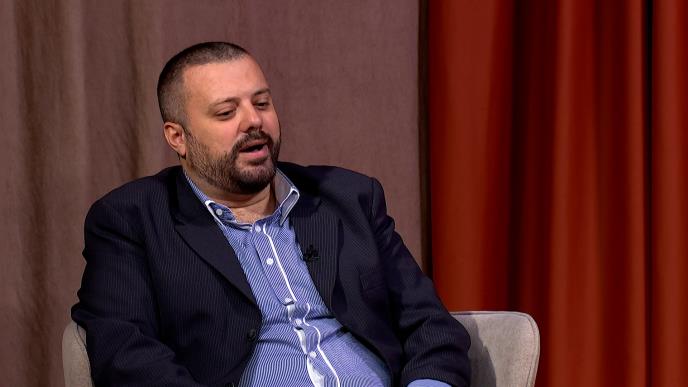
Drago Bosnic. Photo source: Kurir TV
Serbian national Drago Bosnic is the author of propaganda content on the VT Foreign Policy website about Armenia. His articles primarily promote several key narratives, including: “the 2018 revolution was carried out by Soros-backed forces with U.S. support,” that “Nikol Pashinyan is implementing anti-Russian reforms, has shut down Russian-language schools, and is suppressing pro-Russian media,” and that “severing ties with Russia could lead to Armenia’s destruction” (1, 2 ).
His content about Armenia has also been published on Russian-language platforms (1, 2). In one of these articles, he promoted an old Kremlin propaganda narrative, alleging that the United States and Nikol Pashinyan are using Armenians as test subjects for the Pentagon’s biological weapons.
According to the biography on VT Foreign Policy, Bosnic was a senior editor at Fort Russ News (FRN), a far-right platform known for spreading pro-Kremlin disinformation and propaganda.FRN translated and distributed Kremlin-originated disinformation and propaganda materials intended for foreign audiences, while also promoting websites linked to the Kremlin, including outlets identified by the United States government as being controlled by, or under the influence of, Russian intelligence services or the armed forces. Russian media, in turn, portrayed FRN as a “reliable Western source” and used its content for domestic propaganda purposes. The site was shut down in February 2022, shortly before Russia’s military aggression against Ukraine.
Bosnic frequently appears on Russia Today, a Kremlin propaganda outlet, where he is interviewed and presented as a geopolitical and military expert.
lucas leiros
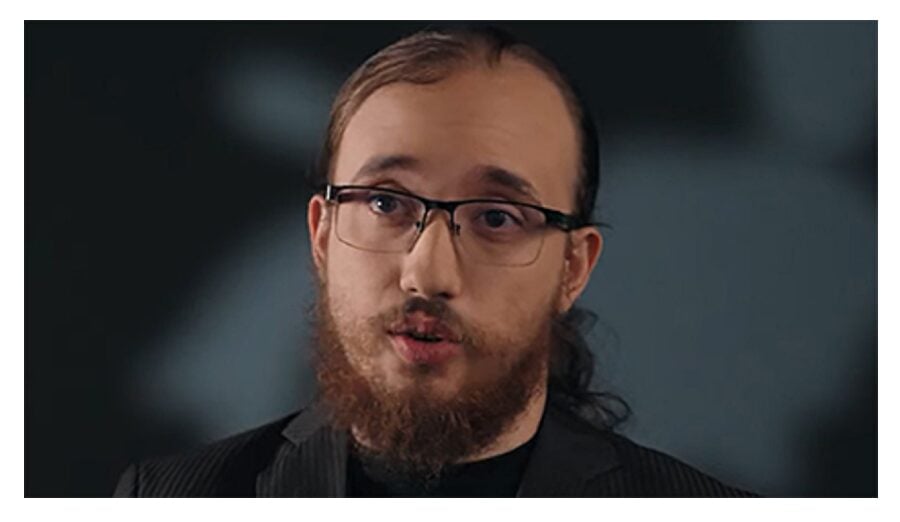
Lucas Leiros. Photo source: belarus.by
Lucas Leiros is likely the author who writes the most articles about Armenia on the VT Foreign Policy website. He presents himself as a Brazilian journalist and geopolitical analyst.
His articles primarily explore conspiracy theories that lack factual support, often criticizing the current Armenian authorities and their relationships with the United States and the European Union.
Occasionally, his publications also appear in Armenian media (1, 2).
The Fact Investigation Platform has reported on Leyros, emphasizing his pro-Russian stance on social media, particularly in the context of the Russian-Ukrainian conflict.
Leyros is also a contributor to the Valdai Discussion Club, where Russian President Vladimir Putin speaks at its annual meetings.
His articles and viewpoints are frequently published on pro-government websites in both Russia and Belarus (1, 2, 3).
Scott Ritter
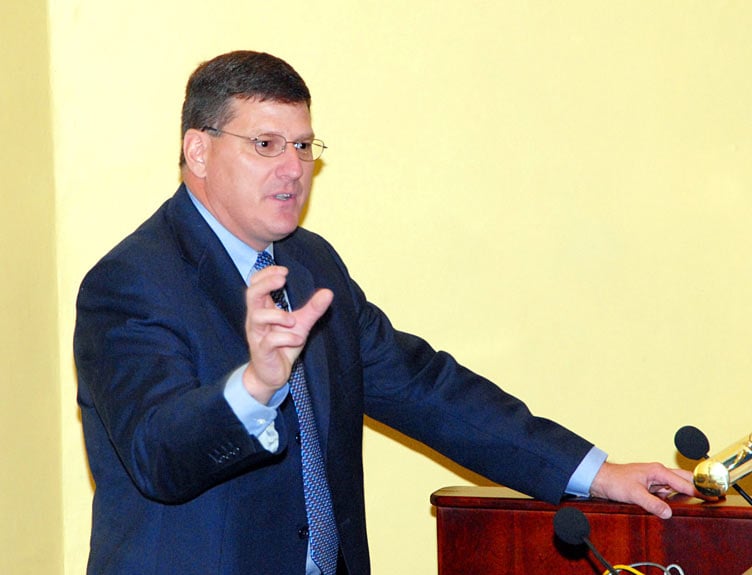
Scott Ritter: photo by rcsi.com
Scott Ritter is an American expert frequently referenced in discussions about Armenia. He is often described as an expert, military expert, and a former UN weapons inspector.
Ritter has participated in numerous interviews with Russian state media and, between 2022 and 2023, hosted his own program on the Solovyov Live channel, “The Scott Ritter Show.” During these broadcasts, he often discussed topics related to the South Caucasus, particularly Armenia.
In a November 2025 interview with Alfa News, Scott Ritter cautioned that Armenia’s alignment with Washington could lead to a dangerous confrontation with Russia. He stated, “America will push Armenia into a confrontation with Russia, and when Russia responds, it will simply step aside and watch you get destroyed.” During this interview, which was also broadcast by Golos Armenii, Ritter reiterated a familiar Russian narrative that the U.S. is merely using Armenia in a way similar to how it has used Ukraine and Georgia.
In a video shared by Politik.am, Ritter noted that Russia is Armenia’s only true ally and accused the current prime minister of betraying this relationship. He stated, “Turkey and Azerbaijan would be more than happy to destroy Armenia. Given Armenia’s attitude toward Russia, it may actually be in Russia’s interest to alleviate itself of this ‘Armenian headache.'”
It is also worth noting that Ritter was one of the most vocal critics of the U.S. invasion of Iraq in the 2000s. After the outbreak of the Russia-Ukraine conflict in 2014, he became a strong supporter of Russia.
In 2011, he was convicted of engaging in sexual acts during an online conversation with a police officer who was pretending to be a minor.
International Reporters
In addition to the journalists and bloggers previously mentioned, there is a platform where international journalists primarily share content related to Russia. This platform is the news agency International Reporters, which was officially registered in 2023 and is based on the Donbass Insider project. According to its official website, International Reporters was founded by French journalist Christelle Néant, with the stated goal of providing multilingual information about the Donbas conflict and other global hotspots. However, the organization Reporters Without Borders (RSF) has characterized International Reporters as a Kremlin-funded propaganda outlet that disguises itself as a media organization in order to spread disinformation and promote false narratives justifying Russia’s invasion.
The platform frequently discusses Armenia. Contributors include Laurent Brayard, a French military correspondent with extensive experience in the Donbas; researcher Anna Andersen; French Vincent Perfetti; and others.
These journalists primarily promote well-known pro-Russian narratives. For example, Laurent Brayard commented on the U.S.-brokered peace agreement between Azerbaijan and Armenia, calling it a trap for the region orchestrated by the United States.
He stated, “This agreement sets the stage for new tragedies in a country that has already suffered greatly. After ratification, Armenian resistance will become impossible, and the long-term consequences are unpredictable, including the potential disappearance of Armenia as a sovereign state. Turkey and Azerbaijan could not have hoped for anything more. Pashinyan will be remembered in history as one of the worst traitors to his country.”
:Anna Andersen emphasizes that the European Union’s support for Armenia is primarily aimed at countering Russian influence. While the EU provides financial assistance, it does not serve as a substitute for Russia as a military guarantor. Instead, the focus is on reducing the Kremlin’s leverage and enforcing sanctions.
According to Andersen, the EU has three objectives in the region: “geopolitical, to weaken Russia’s position; symbolic, to demonstrate to the Armenian public that there is an alternative to Russian influence; and sanctions-related, to prevent the circumvention of European sanctions against Russia through Armenian territory.”
Thus, analysing the work of the mentioned journalists and authors reveals that there are non-Russian analysts who consistently promote narratives aligned with the Russian state, including those concerning Armenia. International media outlets have repeatedly reported cases in which the information disseminated by these analysts has proven misleading.