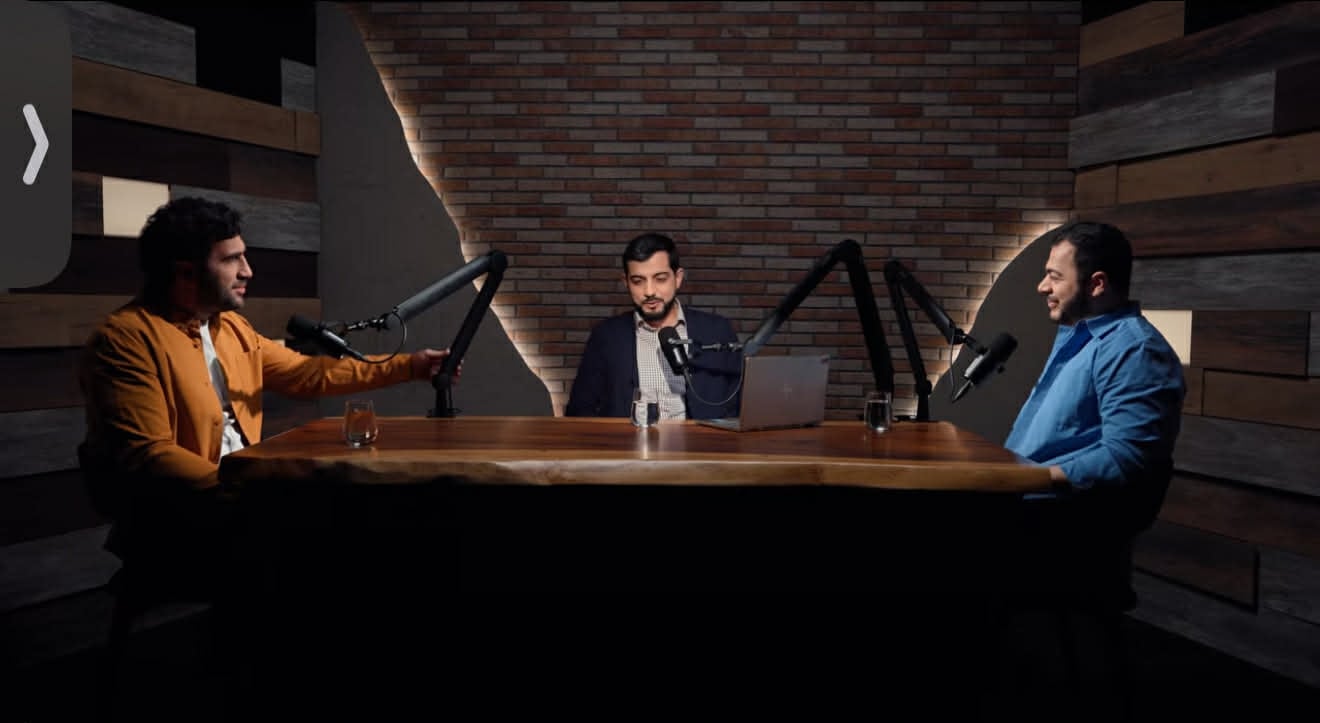
For several days now, Armenian media have been discussing the controversial statement by Sargis Karapetyan, the son of Russian origin businessman Samvel Karapetyan, who is currently under house arrest.
“There will be no dissatisfied woman in a strong Armenia,” Sargis Karapetyan said during the YouTube podcast Triangle, aired on February 1. The remark was made in the context of a discussion on demographic challenges. During the conversation, one of the participants suggested that a “ministry of sex” might be needed, to which Karapetyan responded: “As far as I know, demographic issues cannot be addressed without sex.”
These ideas quickly gained momentum on Armenian social media, sparked debate, and were later condemned by experts and women’s rights organizations. One social media user filed a complaint alleging a criminal offense, and the controversy later attracted international attention, with The Telegraph publishing an article on the case.
Why did the statement provoke such backlash, and what was wrong?
In an interview with Media.am, Human rights defender Zara Hovhannisyan said that while the remark might seem like an example of poor humor or vulgar phrasing, it in fact reflects a broader, deeply rooted mindset, in which women’s dignity and sexuality are seen as instruments for addressing political or demographic issues.
According to her, Samvel Karapetyan’s son portrays women not as independent individuals, but as objects whose dignity is diminished to mere sexual satisfaction. Additionally, the human rights defender notes that there is an underlying message suggesting that men own that dignity.
“There is another aspect to consider: political programs often intrude into a person’s private life, and the issue of individual satisfaction becomes a topic of political debate, which is unacceptable. This also perpetuates deep-rooted stereotypes, as a woman’s satisfaction is mistakenly seen as a guarantee of a strong state, placing the burden of responsibility on women. These ideas gain legitimacy when they enter the public sphere and are disseminated by political figures,” said Zara Hovhannisyan.
She reminded that Prime Minister Nikol Pashinyan made a similar remark in May of last year, highlighting that the issue of women is often used in political discussions. (This refers to Pashinyan’s Facebook post directed at Bagrat Galstanyan, in which he stated, “Srbazan, go continue screwing your brother’s wife; what do you want from me?” -edt.)
The Coalition to Stop Violence Against Women has released a statement affirming that women should not be exploited for political gain.
“Women and other vulnerable groups should not be a subject of political speculation, as this constitutes discrimination, violates dignity, and causes social harm,” the coalition stated.
In an interview with Media.am, sociologist Arpi Manusyan noted that an individual who identified himself as a sociologist participated in the podcast discussion. He not only did not oppose the idea, but supported it.
“Once again, we have witnessed men discussing women’s ‘satisfaction’ from a pseudo-intellectual perspective. In this context, women are framed as objects to be ‘consumed’ by figures such as Dog or Nikol, and these ideas are presented as analytical observations by a sociologist. However, this sociologist not only fails to address the toxic masculine rhetoric expressed by the son of a Russian billionaire but also provides him with a platform that lacks any critical counterbalance. This issue transcends politics; it involves professional ethics, standards, and responsibility. As a sociologist, I find this particularly distressing.”
“Social science and social scientists can and often do hold political views, but they must not tolerate sexism, gender, and class privilege, nor allow their naturalization and reproduction. It becomes even more dangerous when expert or professional knowledge is used instrumentally in situations dominated by big capital and power imbalances, particularly when there is a lack of awareness of the public interest. This can lead to the reproduction of the very inequalities and the language of violence that social science aims to criticize,” emphasized Manusyan.
Given that one user has filed a crime report, we asked what legal consequences this statement could have for Sargis Karapetyan.
Human rights defender Zara Hovhannisyan said that if the punishment were focused on ethics, changing consciousness, and mandatory participation in human rights courses, it would be more beneficial. She reasoned, “If someone is imprisoned, fined, or assigned community service, will that really change their way of thinking? For example, the prime minister should have been held accountable for his remarks; however, we know that in our country, the law is often applied selectively. One person may be prosecuted and imprisoned for the same remark, while another may be rewarded.”