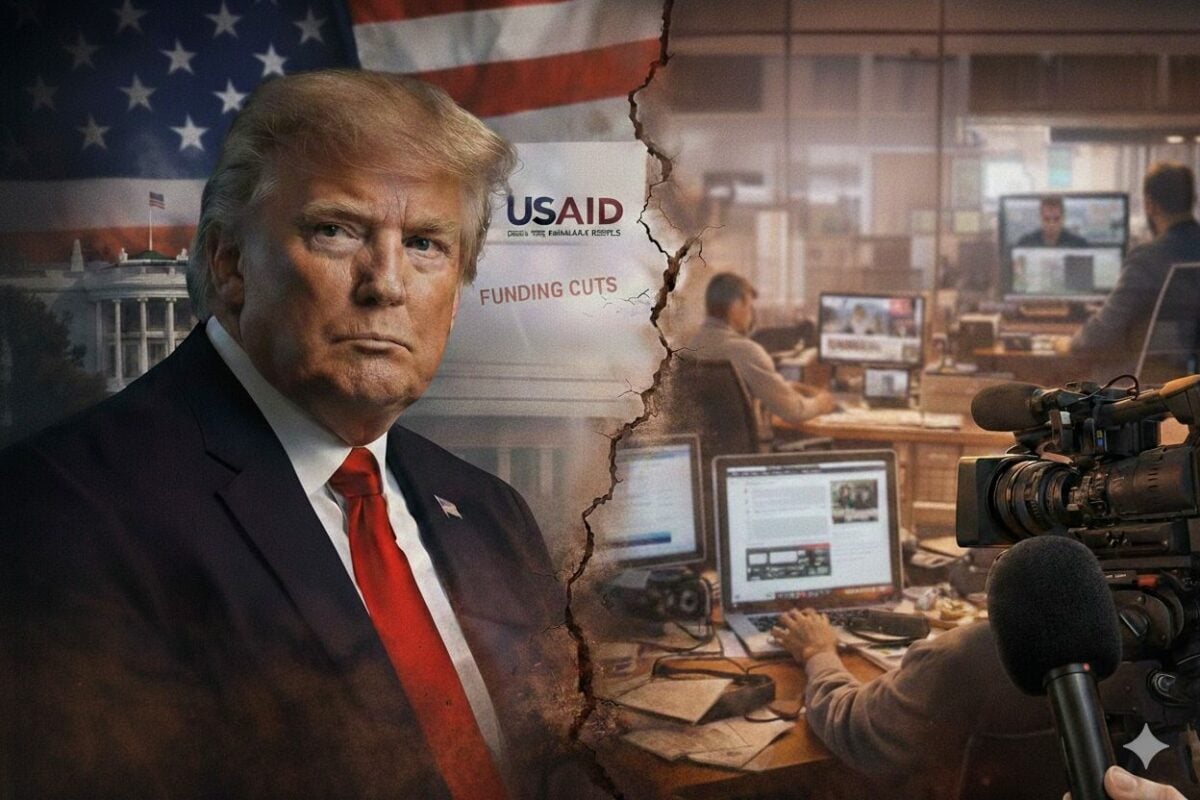
One year ago, the Trump administration officially announced a radical shift in its foreign assistance strategy and the suspension of democracy-support programs run by USAID and the U.S. Department of State.
The decision created a difficult situation in the media market. Following the suspension, international journalistic organizations funded by U.S. grants reported that they had found themselves in an uncertain, chaotic situation and were unsure how to continue their work.
USAID provided financial and technical assistance to independent media in over 30 countries and contributed to the strengthening of staff capacity.
Citing a 2023 USAID report, Reporters Without Borders wrote last year that the agency had funded the training of 6,200 journalists worldwide that year alone, supported 707 newsrooms, and assisted 279 civil society organizations operating in the media sector.
According to the same article, the United States Congress was expected to allocate more than $268 million in assistance to independent media operating in different countries for 2025.
American financial support has played a significant role in the development of independent media in Armenia. Due to the small size of the Armenian media market, advertising revenue is limited, and international grants have long accounted for a substantial share of outlet budgets for independent Armenian media organizations. In recent years, the “Armenia Media Development Program,” funded by USAID, became a key program for promoting the growth of independent media in the country.
The program aimed not only to support editorial offices but also promote a sustainable media environment. As part of this initiative, over 60 media outlets received strategic advice, training, and support to enhance their capabilities. Additionally, 16 editorial offices were awarded grants.
The suspension of support forced several local editorial offices to reevaluate their budgets, downsize staff, or abandon long-term projects. The media began to depend more on short-term financial resources and limited domestic market opportunities.
The declining stability and limited resources of independent media create a troubling situation for the upcoming national elections. There is an increasing risk that individuals or groups pursuing political or economic interests will gain leverage in the information sphere, while the public interest will be pushed aside.
Cuts to grant programs may significantly affect organizations fighting disinformation, increasing the risk of manipulative technological influence during the election period.
“The suspension of the program set us back by more than a year from our planned development timeline.”
Sevak Mamyan, Editor-in-Chief of Infocom
We had received approval for three significant grant programs under USAID’s Media Development Program, totaling $147,000, to be implemented over a year and a half. These programs were not merely routine funding opportunities but were strategically designed to elevate Infocom’s operations.
We started our work on the content production grant in October 2024. Unfortunately, we were only able to work on that program for one quarter, as it was the smallest of our initiatives. The focus of this program was to conduct in-depth, data-driven analysis of reforms in the scientific and legal sectors. The other two programs were much more extensive and were scheduled to start in February. However, at the end of January, it became clear that USAID programs had been suspended.
As part of the technical development program, we planned to create a modern data processing and storage system. The volume of data we currently handle in our investigations has made it increasingly difficult to manage with the tools available to us.
The grant for strategic development aimed to increase our audience, engage a marketing specialist, and strengthen monetization mechanisms.
However, the suspension of these programs became a serious challenge for us. Based on our calculations, generating the same amount through advertising and Infocom Production’s work alone would take at least 4 years. While we have retained our entire team and maintained operational stability, the planned “level-up” that would make us a more self-sufficient media outlet has, for now, been put on hold. The suspension of the program set us back by more than a year from our planned development timeline.
Throughout 2025, our editorial team operated in crisis management mode, focusing on maintaining financial stability and operational continuity. This focus somewhat slowed our work in content production, promotion, and development. Nevertheless, after months of hard work, including expanding our self-financing component and securing new grant programs, we have reached our initial target position by the beginning of 2026, which we had originally planned to achieve by early 2025. As a result, approximately 70 percent of the activities outlined in the programs have either been completed or are currently in progress.
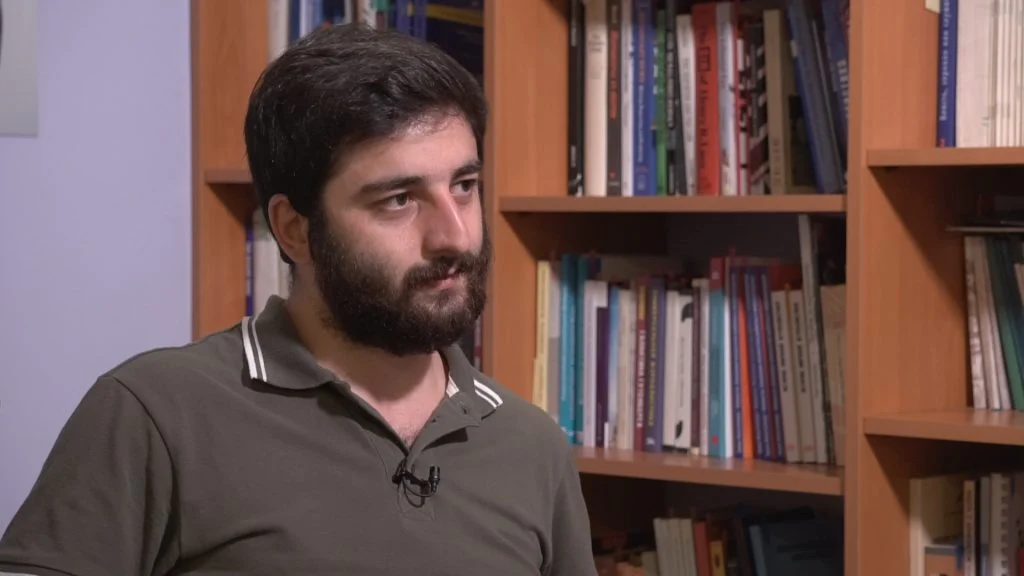
Sevak Mamyan
We have always aimed for self-sufficiency, which is why we established Infocom Production, which provides paid services to various companies, with all revenue directed toward covering our media outlet’s expenses. The funds from USAID would also help us increase our self-financing capacity.
Despite the challenges we face, we continue to operate with the resources we have. We have launched a new website, completed a rebranding process, and strengthened our commitment to data-driven and investigative journalism. We believe that the Armenian audience, already accustomed to paying for quality services like Netflix and respected international publications, will gradually develop a culture of supporting high-quality local content as well. With every step, we work toward a future in which independent media in Armenia becomes stable, sustainable, and truly self-sufficient.
It is important to note that the slowdown in the development of independent media, and in some cases, its rollback, poses a significant danger as we approach the 2026 elections. We are witnessing increased activity by media outlets funded by or affiliated with various political parties, while opportunities for the independent media sector are diminishing. This trend threatens the public’s access to balanced and fact-based information. Independent media play a crucial role in overseeing electoral processes, often being as effective as specialized observer missions. When the independent press faces restrictions, citizens’ ability to make informed and conscious choices diminishes.
“Currently, we are operating with only 40% of our previous budget.”
Harutyun Mansuryan, Project Manager, Hetq Media Factory
The Media Factory was established with a clear goal: to train qualified specialists for the Armenian media sector. These specialists should not only understand theory but also possess practical skills in using modern tools and techniques.
Our graduates work in over a dozen media outlets within the Armenian media landscape. They work for well-known organizations such as Hetq, Infocom, Civilnet, Public Television, Public Radio, EVN Report, and many more leading media platforms. Media executives often contact us about job openings and want to hire our graduates.
Six years ago, all of this became possible with the financial support from the American government. The program received full funding from the State Department, enabling us to provide free, high-quality education to 30 students each year. Our students attended classes in two shifts and followed two directions: research and multimedia. We also had the opportunity to send our students to Syunik, Tavush, or Vayots Dzor for filming, allowing them to explore locations beyond Yerevan and bring back intriguing stories.
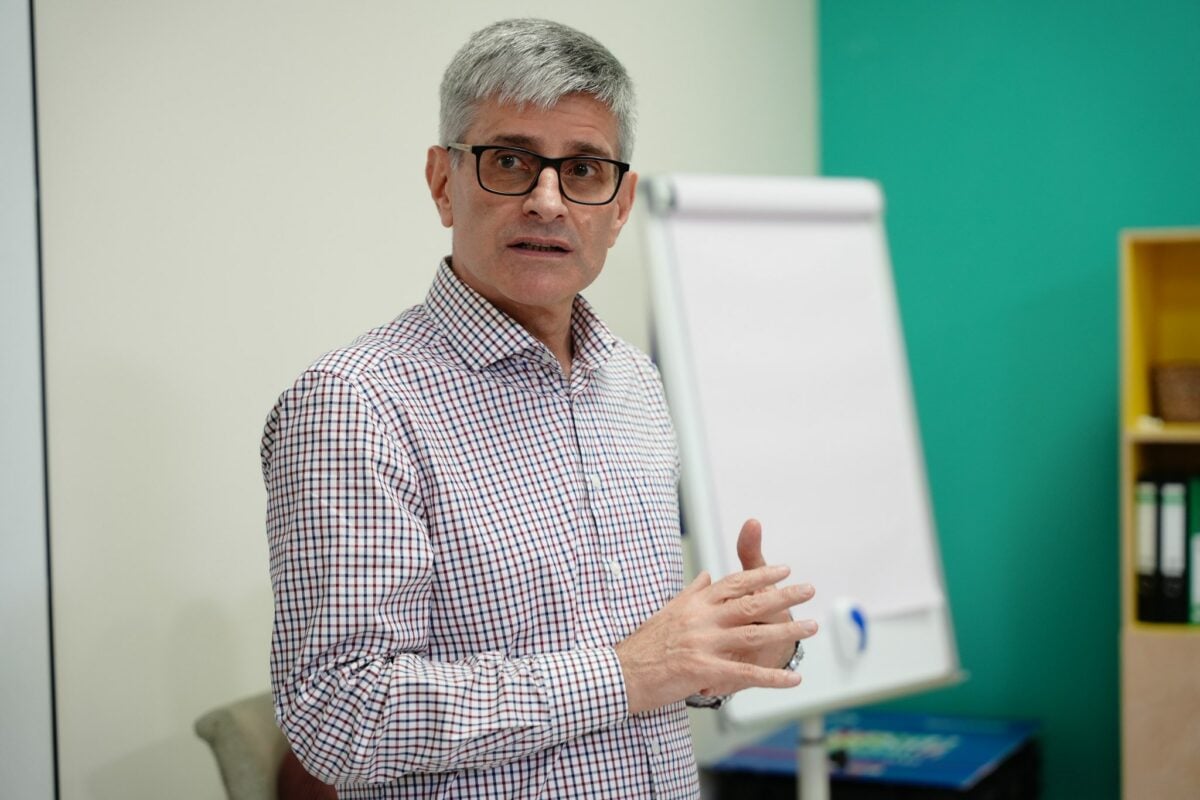
Harutyun Mansuryan. Photo from the Media Factory’s Facebook page.
Everything changed at the start of the second semester of the 2024-2025 academic year, in January. Following the Trump administration’s decision, American funding was abruptly suspended. We were told clearly: “You can close the factory and go home.” However, we felt a responsibility for our students and chose not to give up. During this challenging time, EED, the Hovnanian Foundation, and the Democracy Development Foundation (DDF) supported us. We worked for half our salary, or even went unpaid, yet we still had to pay the rent. We managed to hold out for a month and a half before the Trump administration restored funding. We resumed our work, but this didn’t last long. In early April, we received another call informing us that we were no longer permitted to conduct any financial operations.
That period was quite tough. With the support of the Hovnanian Foundation, DDF, EED, and our graduates, we completed that academic year. We initiated a fundraising campaign supported by our graduates and current students, those who were supposed to study for free but contributed whatever they could to cover the final months of their education. Eventually, we successfully overcame that difficult phase.
With funds raised by Hetq and through our own economic activities, including producing videos for various organizations, we managed to maintain our office space and staff through September. However, we then realized we had no financial capacity to operate beyond that month. We were unable to open admissions and had to stop our educational activities.
Since the funds did not cover educational activities, we decided to apply for support for creative programs instead. We submitted a proposal to EED for a solutions journalism program, which was approved, allowing us to address some of our problems. By November, we secured funding from the Diaspora through COAF and decided to resume our educational program starting in January. Unfortunately, if we do not secure a new agreement by June or July, we will encounter the same issues again next September.
In the past, our budget ranged from approximately $230,000 to $250,000 per year. Currently, we are operating with only 40% of that budget. As a result, we have combined the research and multimedia programs, reduced the course to one semester, and eliminated subjects such as animation, economic journalism, and English. Due to limited funds, we are unable to send our students to the regions for practical work. We are actively seeking additional funding to address this issue, which has turned into a continuous effort to attract donors.
Despite facing financial challenges, we have introduced new subjects, including artificial intelligence. Media evolves quickly, and we must incorporate tools into the curriculum that will ensure our students are knowledgeable and skilled.
In recent years, the media landscape has undergone significant changes. Today, more media outlets are focused on investigation, fact-checking, and data-driven reporting. We have our share of contributions to this transformation. It is often the editors themselves who speak publicly about this.
“Without this support from USAID, Khirat was left without the means to survive.”
Muraz Shamoyan: editor-in-chief of Khirat
We had high hopes for the development of Khirat media, which focuses on the issues of national minorities, particularly the Yezidi community. In partnership with USAID and Internews Armenia under the “Armenia Media Development Program,” we also developed several strategic plans to strengthen the outlet’s growth. The program, which was initially set to run until 2028, has been a vital source of funding for our organization and many others in the media sector. While many Armenian media outlets struggle to secure financial support, our outlet, which focuses on amplifying minority voices, faces an even greater challenge in securing stable, consistent funding.
In the context of Armenian reality, there is a prevailing belief that minorities do not face any issues of discrimination and that everyone is treated equally. As a result, many discussions on this topic often conclude quickly. This perception leads to minority rights not being prioritized by many donors.
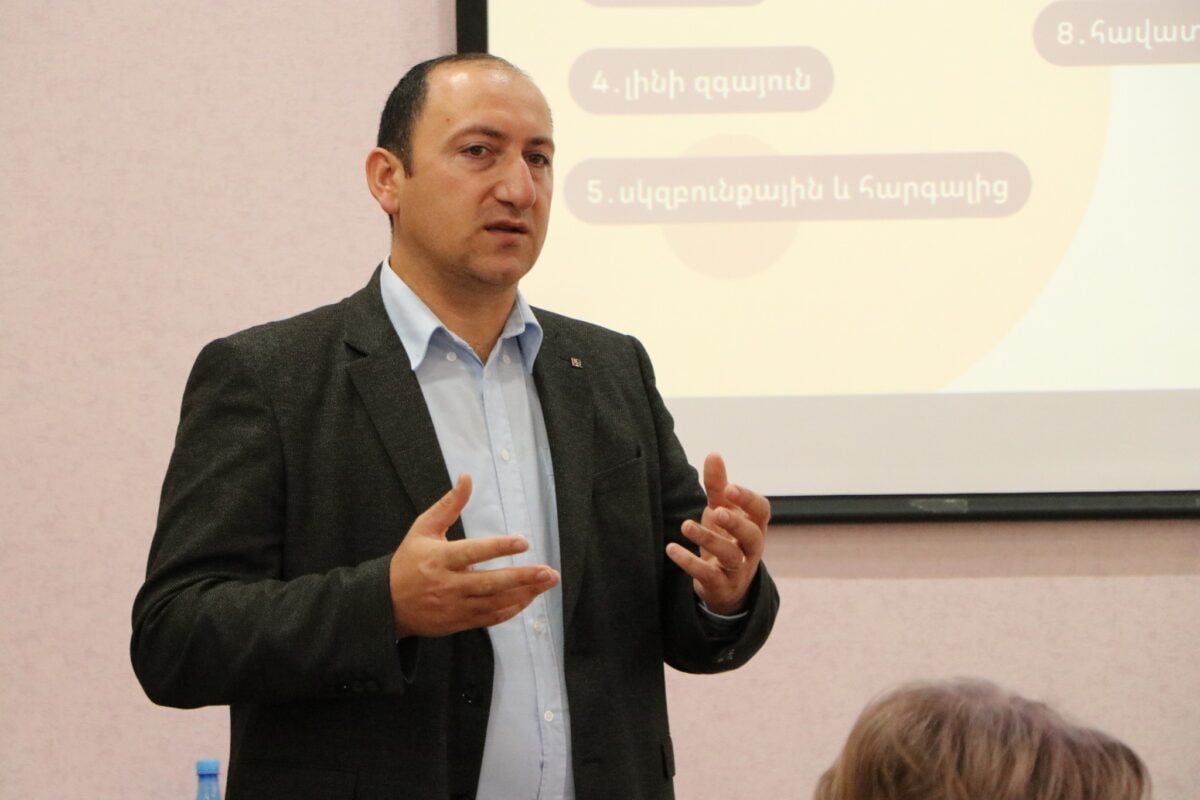
Muraz Shamoyan
Two of our projects won a competition announced by Internews Armenia. We planned to create a podcast and audio films. Additionally, we aimed to develop a series of “Dialogue Platform” programs in which Yezidi youth would visit state institutions with a journalist to facilitate direct dialogue with officials.
The well-known decree freezing USAID programs turned into a significant disaster for us, leaving us in a desperate situation. We received the news of the freeze just a week before the contract was set to be signed. Without this support from USAID, the media was left without the means to survive.
After some time, we had to enter a period of forced downtime. Since May 2025, we have been unable to retain our staff, and our employees have had to seek other jobs. We handed over part of our office, where we also filmed, and moved all the equipment into a small administrative room. This forced downtime lasted until November. In November, we finally received a sub-grant from the Institute for War and Peace Reporting (IWPR), which helped us to partially resume our work. We plan to continue this project until March, but we do not have any agreements for future funding at this time. During this period, we have been actively applying to various international organizations, but we repeatedly receive rejections.
Armenia’s largest national minority may once again lose its primary voice. Major Armenian media outlets seldom cover the issues faced by the Yazidis, often making errors or perpetuating stereotypes. Khirat serves as an essential filter, ensuring quality and sensitive coverage of these topics.
Throughout this year, it has been evident that small and niche media outlets have scaled back their operations, leading to a decline in diversity in the media landscape.
The decline of these media outlets can lead to significant challenges during the upcoming electoral processes. For instance, from our media’s perspective, our audience urgently needs information as elections approach. We have the capacity to cover the pre-election processes in the Yezidi language for the Yezidi community and raise awareness about the electoral process. However, at this moment, we lack a positive outlook and the necessary resources to do so.