Election programs are no longer the most decisive factor in political elections. Today, the primary fights unfold on digital platforms, social networks, and in the media. The information shared on these platforms has become a powerful tool of influence.
As the 2026 parliamentary elections in Armenia approach, the spread of disinformation has increased significantly. Both external actors and domestic political forces are generating fake news and manipulative content. These efforts aim to sway public perceptions and influence voter decisions.
To address the increasing spread of disinformation during the pre-election period and to ensure the public receives verified information, Armenian fact-checking editorial offices plan to collaborate. Members of the InFact unofficial fact-checking network in Armenia will establish a temporary (Pop-Up) editorial office. This initiative aims not only to combine knowledge, skills, and experience but also to help publications reach a broader audience. InFact seeks to unite the media audience and enhance its influence on social networks.
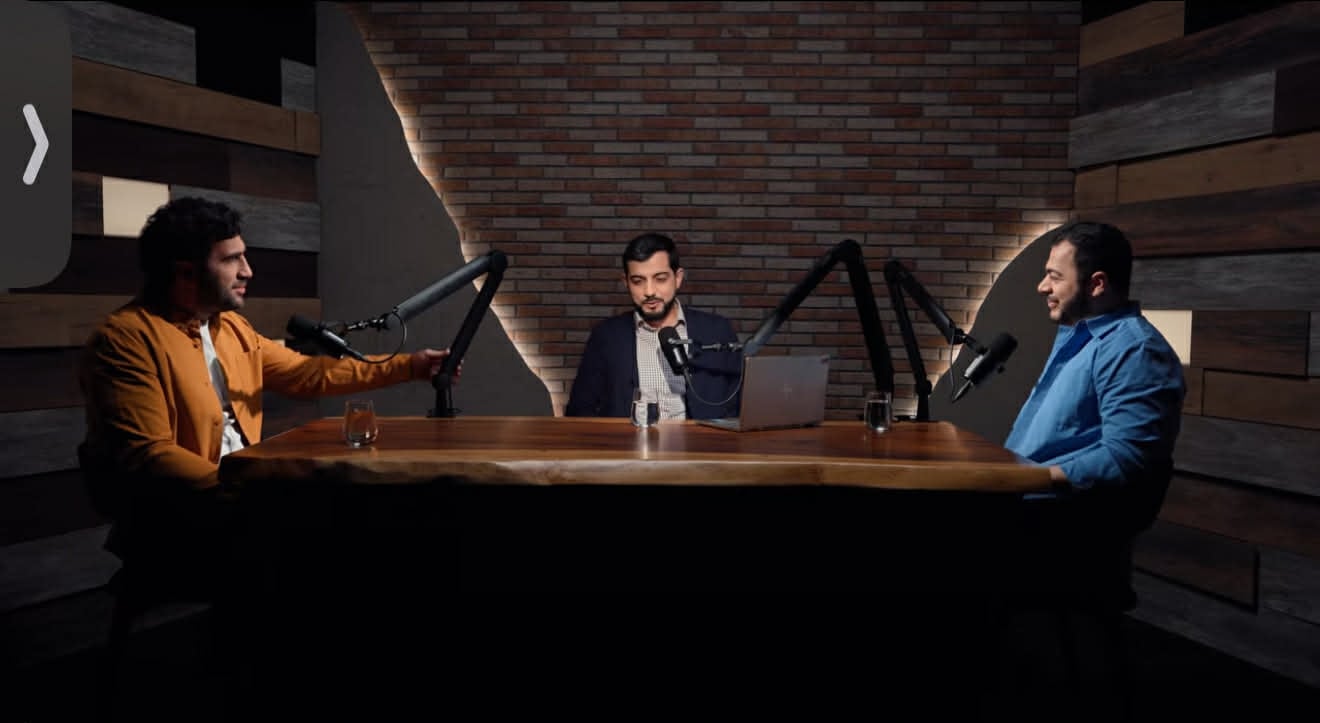
We spoke with representatives from editorial offices involved in fact-checking to discuss the tools of hybrid warfare employed in the Armenian media landscape and the significance of fact-checking.
Ani Grigoryan, editor of CivilNetCheck
” Our ultimate goal is for every citizen to make informed choices in the polling booth on election day, based on accurate facts rather than distorted and misleading information.”
Elections play an essential role in shaping states and societies. Leading up to the elections, various groups attempt to manipulate the information landscape to achieve their preferred outcomes. In our information environment, we can already observe an increase in disinformation stemming from foreign interference, as well as a rise in misleading and false information resulting from internal political conflicts.
Since the beginning of the year, we have observed publications, “investigations,” or misleading revelations purportedly conducted by various reputable international media outlets. Initially, such cases occurred about once a month, but recently, they have been emerging almost every week. Upon examining the situation, it becomes evident that the website that initially published the information is fake. It mimics a credible international media outlet and was purposefully created to spread the material. This website often disappears just a few days after its creation. The distribution process is relatively straightforward: after the fake website publishes the content, it is actively shared on Twitter (now known as X). Occasionally, these materials also find their way into Armenian media outlets, which sometimes republish them without performing even basic fact-checks.

Ani Grigoryan
This mechanism for spreading disinformation has been observed recently in France, Germany, Ukraine, and Moldova. Studies indicate that these endeavors are linked, and the tracks lead back to Russia. In addition to Russian disinformation, we are also seeing misinformation created and disseminated by Azerbaijan. For example, a significant amount of disinformation targeting Armenia is being disseminated within the framework of the “Western Azerbaijan” discourse. Additionally, disinformation that spreads on X and other platforms often appears in well-known Azerbaijani sources.
While we cannot definitively claim that there is coordinated collaboration between Russia and Azerbaijan, this phenomenon is frequently observed. For instance, there have been cases where Armenian media outlets identify false, manipulative, and misleading content in Azerbaijani media and subsequently spread that information.
As the elections approach, we are witnessing not only attempts at foreign interference but also a rise in disinformation campaigns among our political parties aimed at one another. Anti-government forces heavily rely on disinformation from external sources, which they then distribute to the domestic audience. Meanwhile, political factions that own media outlets are increasingly engaged in information attacks against their rivals and opponents.
The government has a network of media closely aligned with it, spreading various conspiracy theories and misinformation about opposition representatives. It is clear that both sides are trying to manipulate public opinion using different tactics.
The work of fact-checkers is crucial in combating disinformation, whether generated internally or externally. Our ultimate goal is for every citizen to make informed choices in the polling booth on election day, based on accurate facts rather than distorted and misleading information. I am pleased to announce that the member organizations of the fact-checking network in Armenia will collaborate to combat the spread of disinformation as we approach the elections.
This program, proposed by the Media Initiatives Center, aims to form a small team of fact-checkers that can effectively share skills, leverage resources, and reach a wider audience.
Often, two fact-checking editorial teams investigate the same issue. In such cases, we can coordinate our efforts to avoid redundancy and cover a wider range of topics. Additionally, we plan to republish each other’s materials, which is essential in today’s information-saturated environment. The refutation of misinformation must reach as many people as possible.
Hasmik Hambardzumyan, Editor-in-Chief of the Fact-Checking Platform (FIP)
“We anticipate a significant increase in disinformation, leveraging lessons learned from the Moldovan elections and new tools developed as a result.”
frequently discuss hybrid warfare and disinformation campaigns, which have become increasingly active in recent months. Our analysis indicates that these activities are orchestrated by certain groups in Russia; if not directly by the government, then by influential individuals within its upper echelons. There are instances in which these efforts can also be traced back to Azerbaijan, with Haqqin.az serving as an active platform for disseminating such information.
Turkish media is often seen as a significant arena for disinformation campaigns and the spread of false information. A notable example is the OdaTV website, where journalist Okay Deprem has been identified as a Lugansk citizen and an active participant in Russian propaganda. He has spread false information on sensitive topics concerning a segment of the Armenian population, aiming to provoke anxiety, concern, and polarization within Armenian society.
We anticipate that the flow of disinformation will significantly increase in the coming months. We also expect to see external influence operations, as an attempt at influence was observed six months prior to the elections. The campaign, known by the Russian name “Matryoshka,” was executed in Moldova and later in Armenia, also six months before their respective polls. With the “Matryoshka” campaign, false content is initially published on social media platforms and then distributed through automated bots. A large number of fake videos circulated on social networks, featuring individuals falsely claiming to be Holocaust survivors, who alleged that Nikol Pashinyan was committing genocidal acts in Armenia. These videos were generated using AI and were clearly fabricated, lacking any basis in reality.
For this reason, we anticipate a significant increase in disinformation, leveraging lessons learned from the Moldovan elections and new tools developed as a result.

Hasmik Hambardzumyan
As for the internal hybrid campaigns, we have indeed observed their presence. For instance, a photo of the completely destroyed Tsitsernakaberd memorial complex has been circulating. The topic of border movements is also frequently used. These issues are introduced for domestic consumption to incite panic within the population, and there are many such instances. Additionally, the authorities often make manipulative or misleading claims that need to be verified to provide the public with an accurate representation of reality.
We are currently reviewing the government program to assess the extent to which various promises have been fulfilled. I must point out that there have been shortcomings, particularly in school and road construction, as well as in several other programs. I believe this initiative is crucial for enabling citizens to make informed choices. Unfortunately, misinformation, both from abroad and within our own country, often spreads in our media and reaches a broad audience, achieving its intended impact. Disinformation spreads at an incredible speed. While I don’t have exact numbers, the refutation and exposure of disinformation reach fewer readers and attract less attention than the disinformation itself. This issue is compounded by our society’s low level of media literacy; people tend to believe whatever they see without questioning it. This situation ultimately benefits the tools of hybrid warfare, enabling them to achieve their goals more effectively.
The work of fact-checkers is becoming increasingly important in this context. Our main task in the coming months will be to identify and refute as much disinformation as possible while providing our readers with accurate, factual information. To strengthen our efforts and combat disinformation more effectively, we will soon establish a fact-checking Pop-Up editorial office. This will include representatives from various media outlets focused on fact-checking. By doing so, the findings from our editorial teams will be more accessible, ensuring a larger audience receives factual, verified information.
Christine Barseghyan, Director of “Hetq”
“Our society has a serious issue in distinguishing between false information and the truth.”
Armenia is at a complex geopolitical crossroads, facing disinformation from various sources. I believe domestic disinformation and manipulation are currently more significant than external influences. We are witnessing a significant increase in the spread of fake news and misinformation across the country. Given that Armenia is affected not only by its internal dynamics but also by external players’ interests, it is understandable that foreign disinformation has become more prevalent. “Hetq” remains vigilant in monitoring disinformation from all directions. We must communicate with our audience using solid facts at all times.
The biggest issue is that the audience tends to consume simple, primitive fake news even more readily. This can have a severely destructive effect, making it difficult for the media to present real information and factual content. Even after days of effort to provide accurate information, they often struggle to restore balance in favor of the truth.
Today, the generation of fake news has become significantly easier and more sophisticated, and our society has a serious issue in distinguishing between false information and the truth. Information spreads through numerous channels, with social media platforms playing a dominant role. Thousands of Telegram channels can be created in a single day, and hundreds of thousands of bots can be activated. Moreover, a media outlet’s small fact-checking team, often comprising only one or two people, cannot effectively monitor everything and ensure they do not overlook any critical topics.
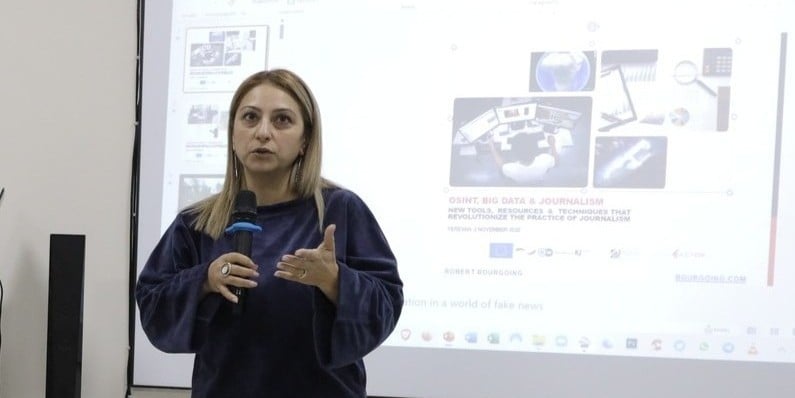
Christine Barseghyan
It is no secret that, following the end of American funding, editorial offices are facing a significant, and I don’t hesitate to say it, existential threat. In addition to their ongoing work, media outlets need resources to combat disinformation during the pre-election period. I hope that some of the EU funding for combating disinformation during the parliamentary elections will also be allocated to the media and delivered on time.
The future development of our state will be influenced by these factors, as will the accountability and transparency of future elected officials. During the pre-election phase, it is crucial to provide the public with accurate, truthful, and verified information so that citizens can make informed decisions.
To enhance their influence, fact-checkers are seeking opportunities for collaboration. In the past, as members of the InFact group, we have learned together, held joint discussions, and raised funds for tools. At this stage, we aim to unite our efforts in the fight against disinformation. I believe this collaboration will help elevate the impact of fact-based information, thereby increasing trust in the media.