In the information era, where the line between real and fake is often blurred and sometimes imperceptible, critical thinking and a culture of fact-checking have become invaluable skills.
The advancement of AI requires high media literacy and accountability from both journalists and users.
Particularly during elections, military conflicts, and global crises, AI-generated and disseminated disinformation serves as a tool of influence, manipulation, and public opinion shaping.
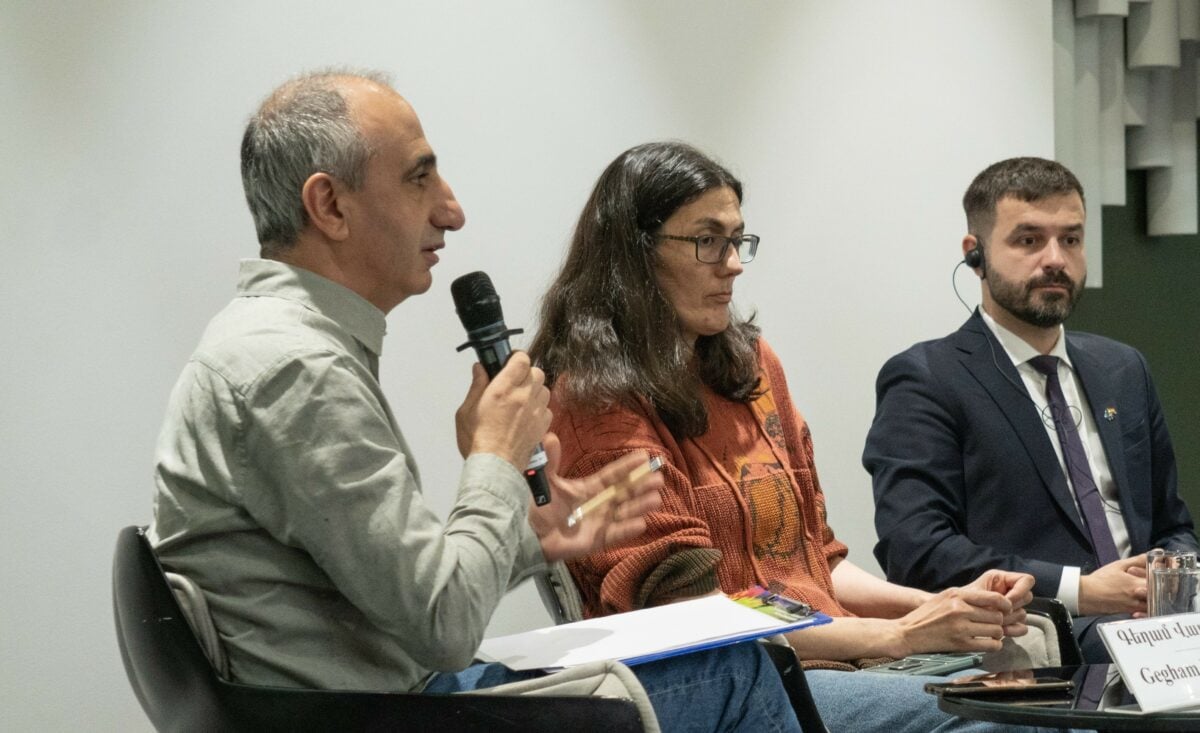
One of the discussions of the Media Literacy Week, entitled “Media Literacy and Responsible Digital Citizenship,” addressed these very issues. International and local speakers tried to answer whether artificial intelligence creates more challenges or opportunities in the fight against disinformation.
Gor Tsarukyan, Director of the Public Relations and Information Center SNCO
“Disinformation today is generated and disseminated at machine speed.”
The first and primary component in combating disinformation is for the government and state bodies to respond swiftly and thoroughly to any disinformation flow.
The second component is the existence of independent media and fact-checkers. In today’s era of information upheaval and disinformation, the role of independent media is crucial. Relying solely on information provided by the government, regardless of how effective it may be, or depending exclusively on information from certain individuals, will not be enough to build trust between society and the state. The third key component in combating disinformation is fostering a media-literate society. It is the united efforts of these three elements that can lead to positive outcomes in this process.
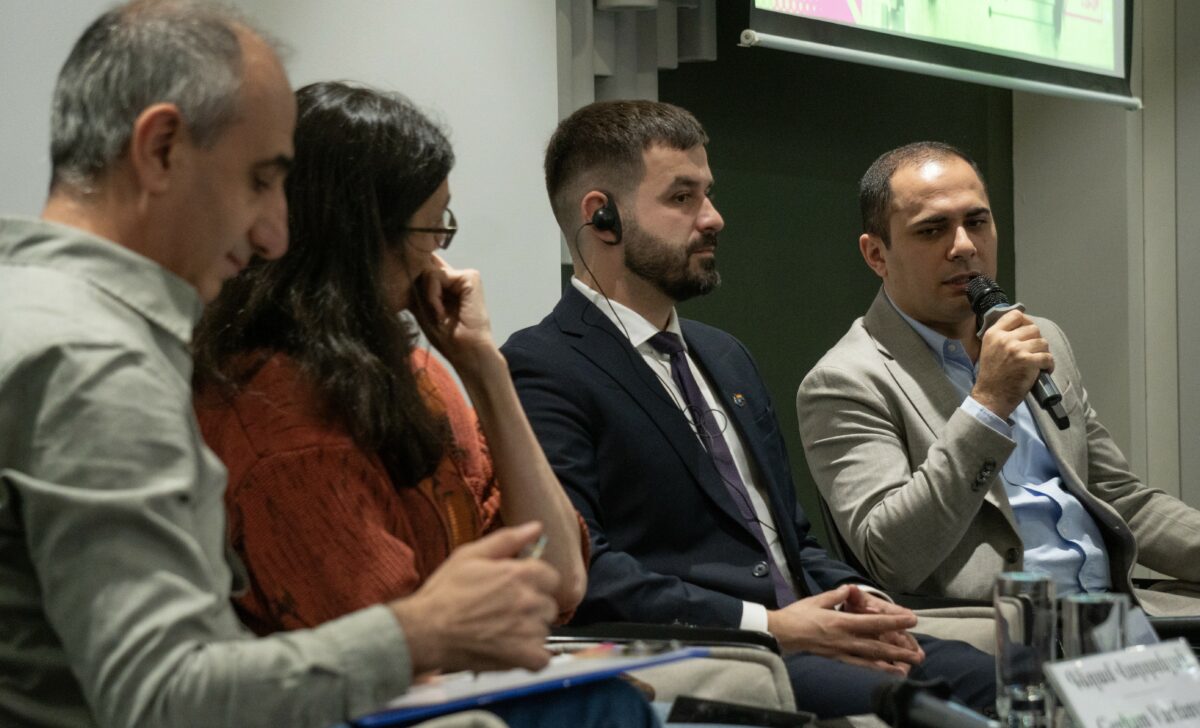
Gor Tsarukyan
AI presents both opportunities and challenges. Nonetheless, I believe that new technologies offer greater chances to inform people and combat disinformation.
To combat disinformation, we first need to teach people not to trust any information without verifying it and understanding its source. It is essential to question and confirm any information, particularly if it is overly positive or negative. Often, this kind of extreme information is misleading or false.
Another noteworthy factor is that people should have the opportunity to verify information; this is where artificial intelligence can be beneficial. Today, AI-powered tools enable quick verification of information. Unfortunately, these tools currently lack access to our internal information flows. Therefore, we need to focus on developing a similar tool that would allow us to monitor our entire information landscape, enabling ordinary citizens to access and verify the information that concerns or interests them.
In the fight against the spread of disinformation, I believe it is futile to expect that large technology companies will ultimately take action to assist us. We cannot rely on them to moderate or reduce the dissemination of false information through bans and restrictions.
Disinformation today is generated and disseminated at machine speed. Fact-checking and public awareness should also align with this speed; to achieve this, appropriate tools must be created.
Tomas Krysak, Cognitive Security Expert, Slovakia
“Following the recent elections in Slovakia, there has been little effort to analyze strategic communication and hybrid threats.”
In the 21st century, as technology advances and digital platforms and artificial intelligence become powerful tools of influence, strategic communication has become essential for all states. Following the recent elections in Slovakia, there has been little effort to analyze strategic communication and hybrid threats. There is even a perception that the government may be covertly supporting those who seek to manipulate the Slovak public. Often, these threats do not originate from external forces; they can also arise internally, manifesting as a “Trojan horse.” Therefore, the state must protect itself from hybrid threats through effective strategic communication.
Today, both social platforms and emerging technologies, including artificial intelligence, are negatively impacting society by contributing to the spread of disinformation. Technology giants like Google, Meta, and OpenAI seem unconcerned about the quality of the information that people receive and consume. They show little interest in moderating content. As a result, people across the globe are exposed to the same information flows, raising concerns and exacerbating societal polarisation. Humanity today is far from accepting and respecting any other opinion that does not align with its own.
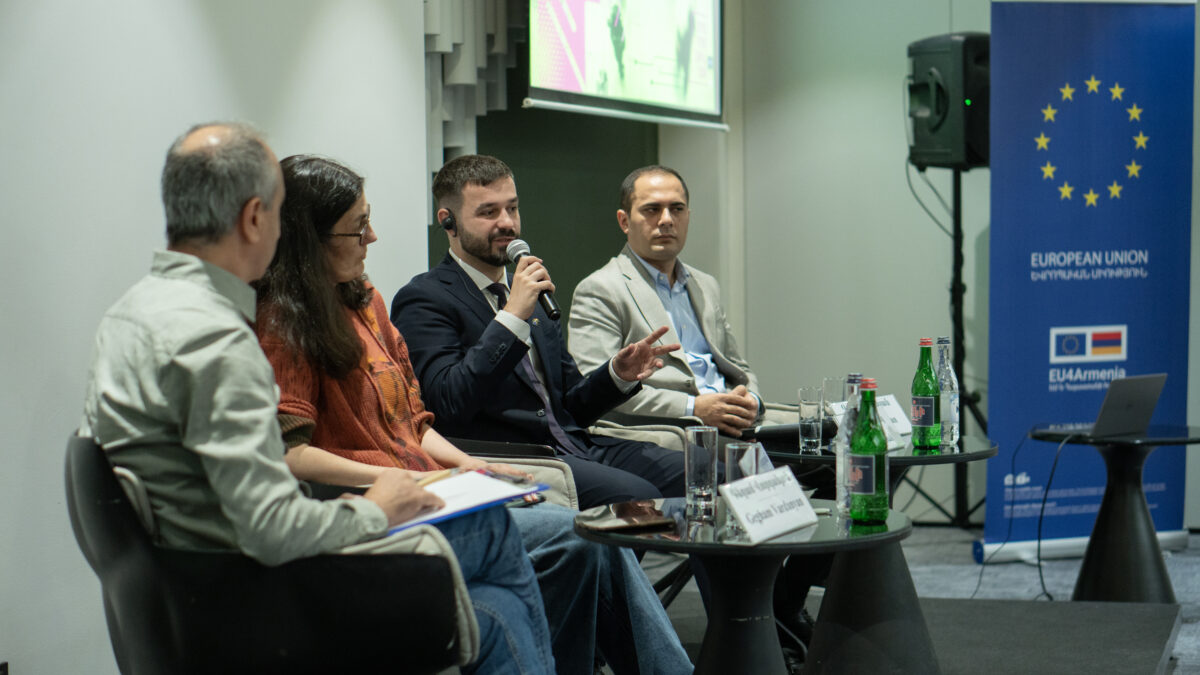
Tomas Krysak
It is important to understand that there is no quick solution to the problems present on digital platforms. In Slovakia, various civic initiatives have long sought to implement effective strategic communication, especially during periods when the government was either inactive or failed to adequately address these challenges. I believe people always have the power to enhance the information landscape. The main question is how to ensure that a critical mass of society understands the necessity of improving the information landscape and takes action in that direction. I hope that as we continue to take action in this direction, we will eventually have generations that are better prepared and more aware of these technologies and platforms. I don’t foresee any scenario in which the authorities will be able to solve these problems. Nevertheless, I don’t lose faith in humanity.
I cannot help but say that while there are certainly challenges associated with AI, it also presents us with significant opportunities. From my own experience, I can say that analyzing any information phenomenon used to take weeks, just to identify narratives and trends. Today, AI accomplishes this work in mere seconds. The ability to comprehend what is happening in the information landscape has never been more accessible than it is now. Additionally, this advancement creates excellent opportunities for self-education.
Vardine Grigoryan, independent observer
” Doubt can be destructive if not accompanied by steps to seek out and verify factual information.“
In our previous research on electoral behaviour and citizen engagement in Armenia, we found a prevailing public belief that citizens had little power to effect change. This perspective was reflected in our public surveys. However, after the revolution, this attitude has shifted significantly. Now, a common sentiment expressed by citizens is that meaningful change is possible through elections. The idea of not being able to change anything is reflected in a very small percentage of current surveys. In other words, society now views itself as an active participant. Unfortunately, there is a growing belief that this perception is being manipulated. People are constantly bombarded with distressing, disappointing, and frightening information, which leads to feelings of powerlessness. As a result, it seems that the only action they feel they can take is to express their anger. When we compare reactions to good news and bad news, we find that anger has become the dominant emotion and expression. Even when good news is more significant, it tends to spread less and receive less attention than negative information.
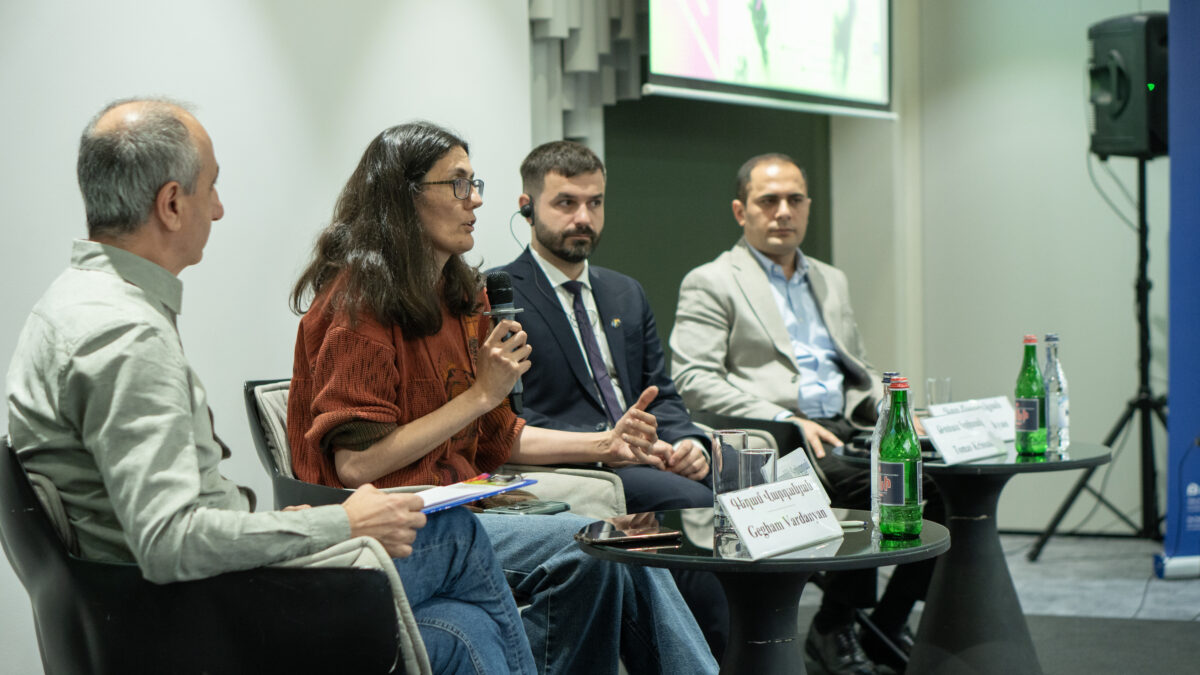
Vardine Grigoryan
I believe that both artificial intelligence and social media platforms contribute to the constant sense of anxiety, fear, frustration, and the presentation of destructive behaviour. Our society needs to reevaluate what it consumes, how it engages with that content, and how it personalizes or depersonalizes the events around it.
When discussing whether AI is a challenge or an opportunity, it’s essential to consider the intention and goals behind its use. Any AI tool can be utilized for both positive and negative purposes. I hope we can create a platform that consolidates information from Armenian fact-checking organizations, enabling people to move from merely doubting information to actively verifying it. If we focus only on doubt, we risk fostering a serious problem of growing distrust. Doubt can be destructive if not accompanied by steps to seek out and verify factual information.