Recently, the opposition “Armenia” faction in the National Assembly called for the termination of Hakob Hakobyan’s powers as a member of the Commission on TV and Radio (CTR). The faction filed a complaint with the Corruption Prevention Commission (CPC), claiming that Hakobyan made insulting remarks about the Armenian Revolutionary Federation (ARF) during an interview with First News. They argued that his behavior violated the constitutional expectation for political restraint required of CTR members. Although the CPC had confirmed that Hakob Hakobyan had indeed committed a “violation of conduct,” the ruling party did not support the draft for his dismissal. Instead of debating over the definition of “political restraint,” this article approaches the issue from the perspectives of public communication, media, and discourse analysis.
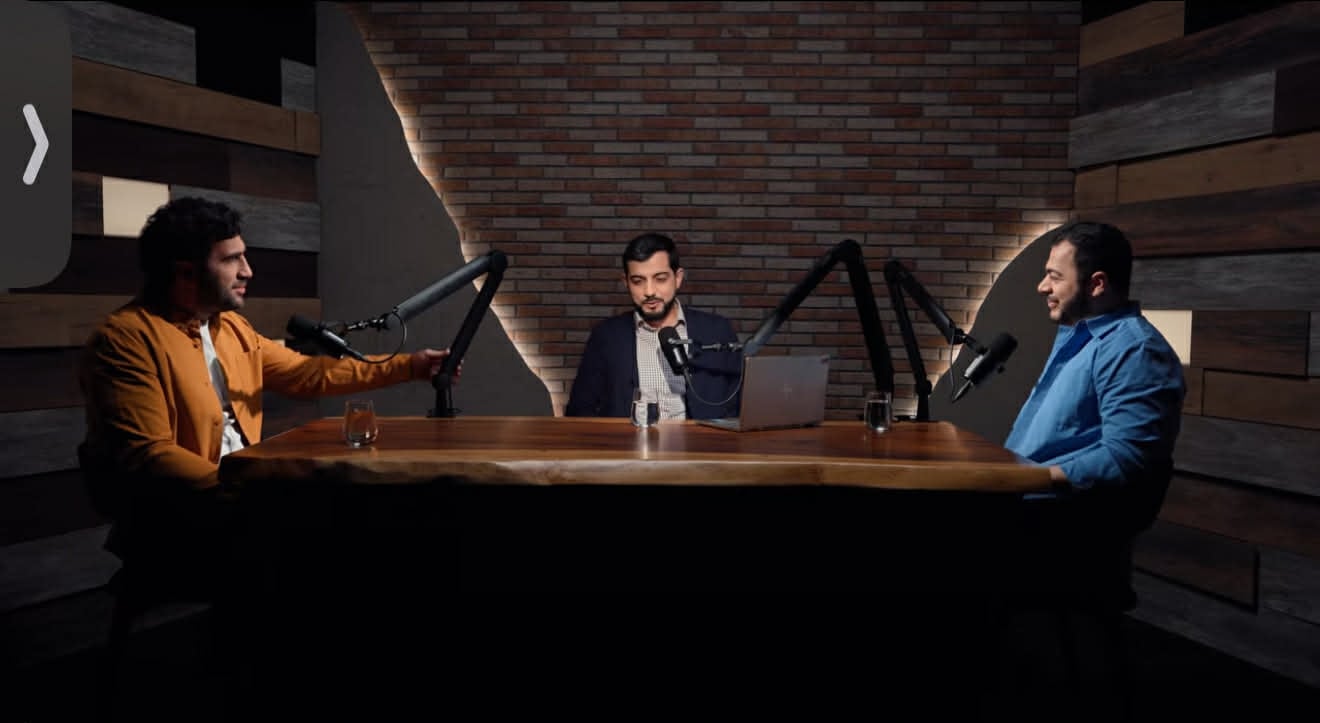
In his numerous interviews, whether with public television or private media, Hakob Hakobyan presents himself under a literary pseudonym. The hosts introduce him as a poet, translator, and former Minister of Culture of the Republic of Armenia, but they do not mention him as a CTR member. He does not identify himself as an official; however, according to the Constitution, he is a member of an independent commission elected by the National Assembly, solely by the votes of the ruling Civil Contract party.
In university departments focused on social sciences, journalism, media, and communication, students are introduced to research methods such as discourse analysis and narrative analysis. A fundamental concept taught is the 5W rule, which stands for who, what, when, where, and why. This rule pertains to understanding the author, the content, the context, the timing, and the location of information. The purpose of this approach is to ensure that listeners, viewers, or readers are aware of any public, corporate, or private conflicts of interest, as well as the speaker’s political or economic affiliations. This awareness allows them to make informed judgments about the speaker’s impartiality and neutrality.
Hakob Hakobyan is a member of the Commission on Television and Radio (CTR), who receives a salary from public funds and holds a state official position. He often presents himself to the public not as an official or a member of the commission, but rather as an intellectual, poet, or translator. However, let’s keep in mind that during the National Assembly hearings, it was not the poet or translator Hakob Hakobyan who was summoned to the National Assembly hearings, but rather the public official Hakob Hakobyan. On January 21, 2022, 68 deputies from the ruling Civil Contract party elected Hakob Hakobyan to his position. His written consent for the role was submitted in the name of Hayk Konjoryan, the head of the Civil Contract faction in the National Assembly. Additionally, the police clearance was issued in the name of Hakob Hakobyan, and the protocol from the National Assembly’s counting commission also pertains to him. When Hakob Hakobyan was appointed Minister of Culture of the Republic of Armenia in 1991 and again in 1993, his employment record listed him simply as Hakob Hakobyan. The same name appears on the Television and Radio Commission website, where he is listed as a member. However, it is unclear on what legal grounds his literary pseudonym is included in parentheses, as it is not related to his official position or duties.
In the well-known interview, Hakob Hakobyan discusses European civilization, the rule of law, and the importance of respecting legal norms. Therefore, it is reasonable to expect that he should apply these principles to himself as well, demonstrating transparency and accountability to citizens. There is no official named Hakob Movses. Hakob Hakobyan assumed his position without adopting the pseudonym “Hakob Movses,” thus leaving behind his personal life and all its implications. I am writing to clarify that when Mr. Hakobyan discussed his intellectual and personal life outside of work during the National Assembly hearings, he exhibited a clear disregard for the legal, moral, and ethical standards of European civilization and the European state that he professes to uphold.
In European legal culture, the “identity” of a high-ranking official is regarded as more significant than their personal “identity.” They cannot separate their official role from their personal life, even after working hours.
Being an “intellectual” does not exempt an official from their legal, ethical, and moral responsibilities. In fact, it can further erode their public authority and credibility, undermining the public’s trust in the institution they represent. This situation creates a reasonable suspicion that the official, aware of the limitations of their position, may attempt to circumvent those limits through “identity manipulation,” ultimately misleading the audience. It is essential for the audience to know exactly who the speaker is.
It is ironic that the CTR social media page writes, “The draft decision to terminate the mandate of Hakob Movses, a member of the Television and Radio Commission, was not adopted.” At the same time, Hakob Hakobyan himself insists in the National Assembly that he be “recognized” and “judged” as Hakob Movses, the intellectual, rather than as a CTR member. While Hakob Hakobyan receives a salary as an official, he often expects to be treated as an “intellectual” when confronted with challenging situations or when he breaches rules of conduct.
In summary, Hakob Hakobyan’s actions serve as a clear example of how an official in a democratic state should not behave concerning public communication and official ethics:
A. He should not present himself as an “intellectual” or a “private individual” while simultaneously holding a high-ranking official position.
B. He should not attempt to imbue his speech with the authority of a “neutral, independent intellectual.”
C. He should not mislead the public or audience in terms of communication and transparency.
By accepting a public office, an individual also assumes the obligation of impartiality and political restraint, and hiding behind a literary pseudonym does not negate that responsibility.