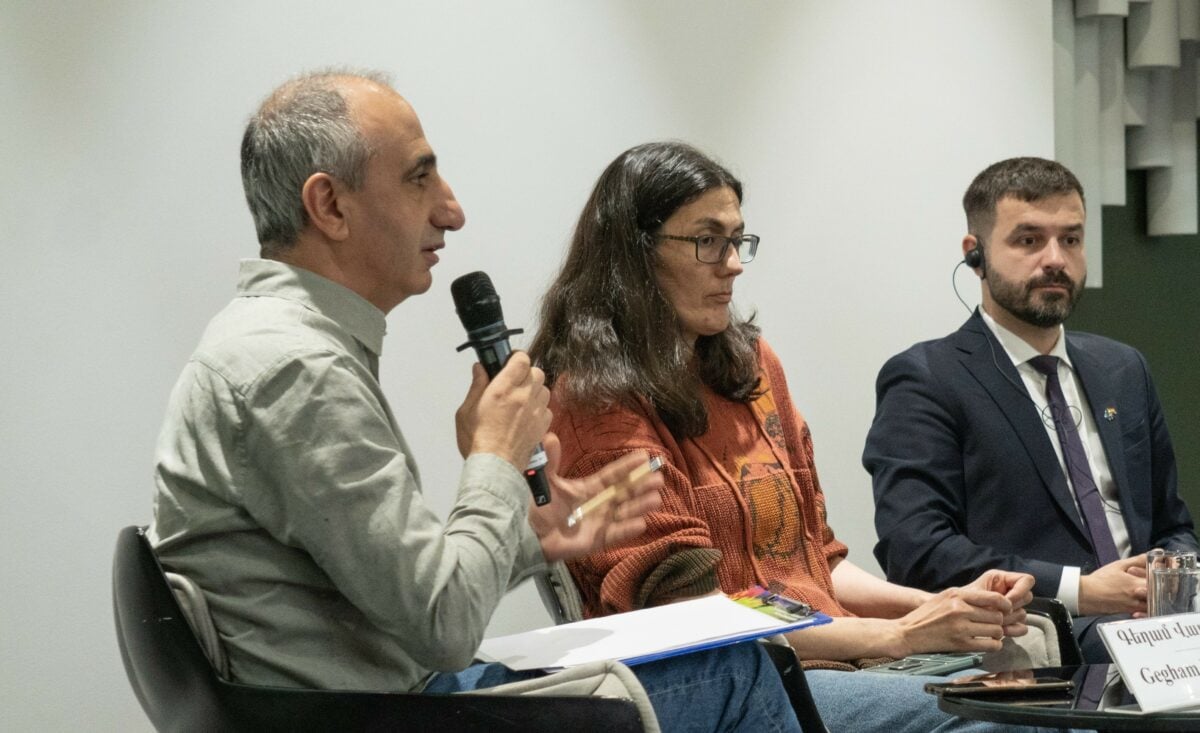
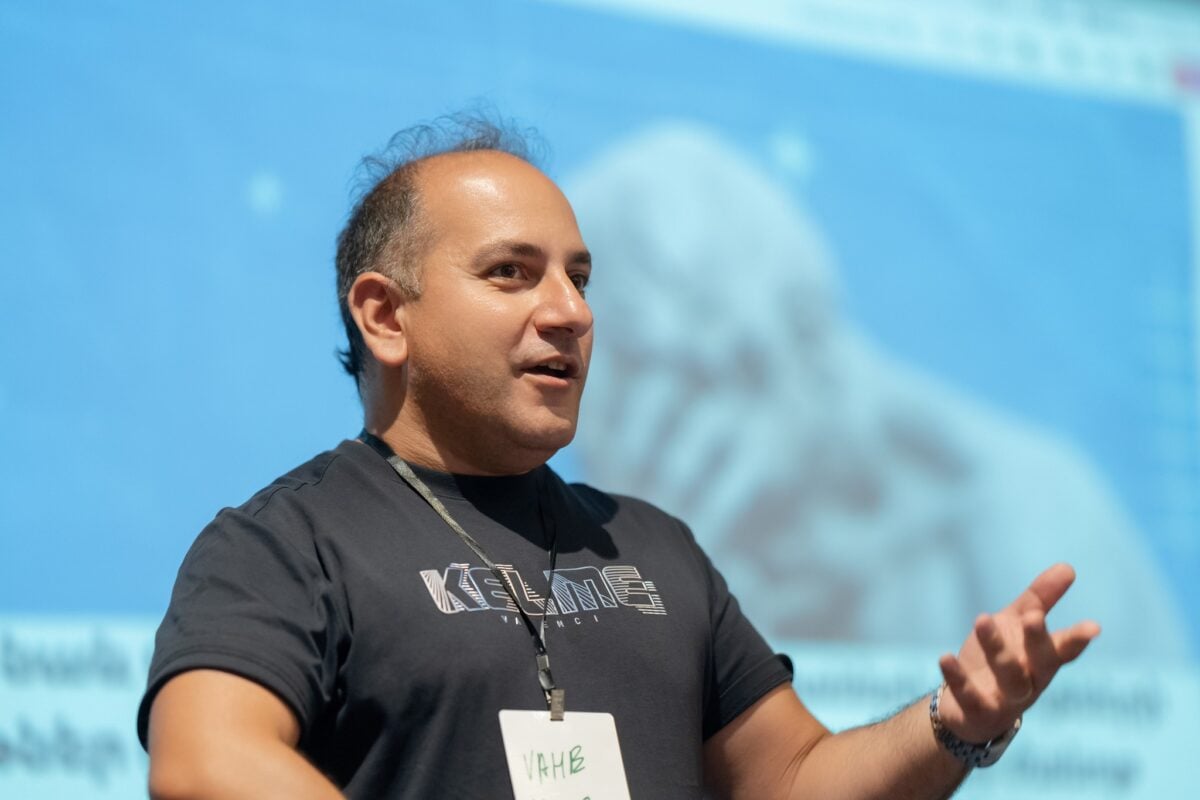
In the 21st century, libraries are no longer seen as primary sources for acquiring and disseminating information. The printed press, radio, television, and the Internet have taken on this role. Libraries were not assigned this task.
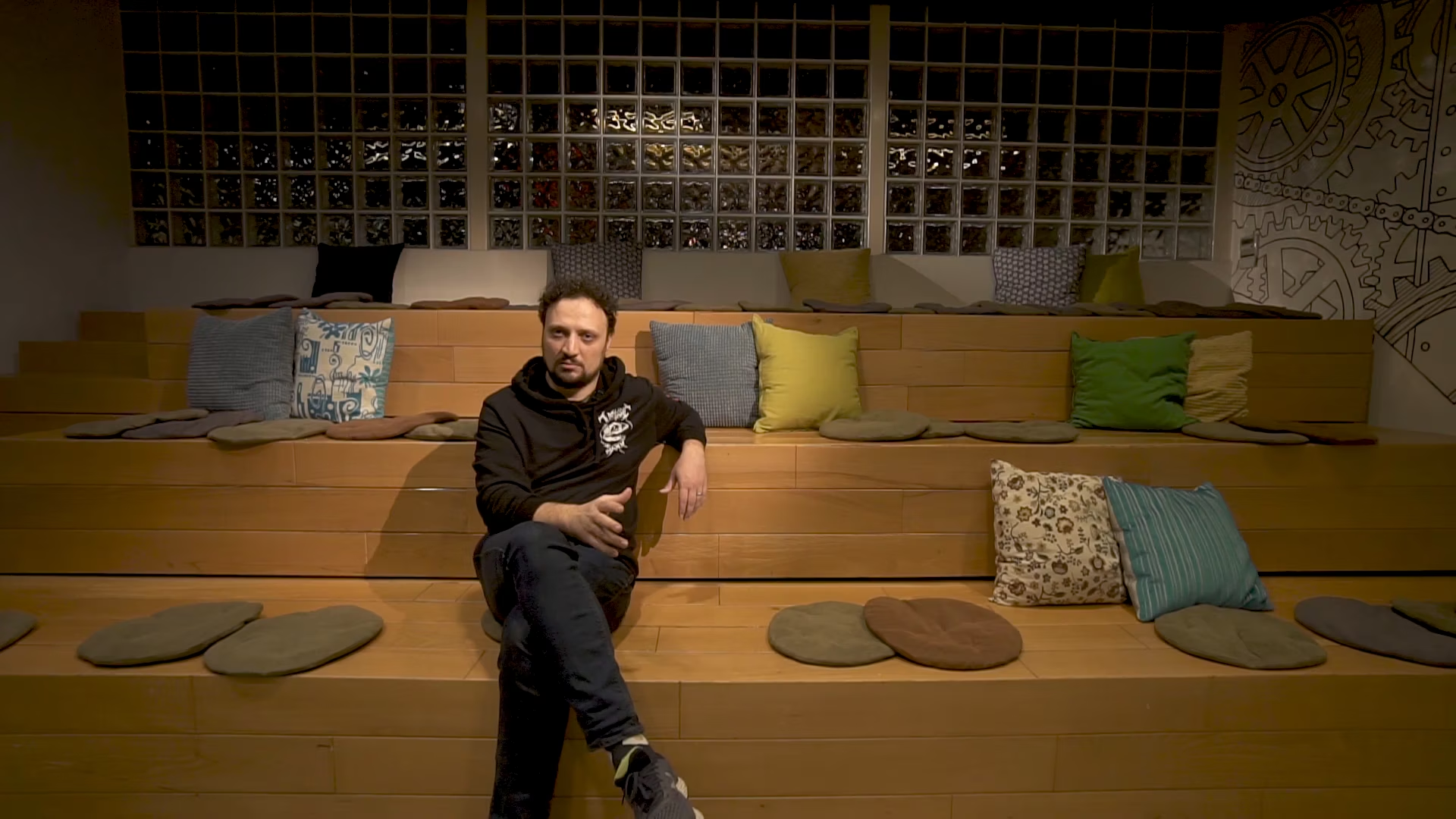
Vahe Ghukasyan, a bookman, prose writer, and fact-checker, discussed the challenges libraries face today in an interview with Media.am. He emphasized that libraries play a crucial role in addressing the issue of increasing literacy, including media literacy. Thus, it is essential for libraries to promote media literacy actively as part of their mission.
Libraries have become part of the strategy to combat disinformation by establishing media centers within them. What do you think of this initiative?
In the 21st century, libraries are no longer seen as primary sources for acquiring and disseminating information. The printed press, radio, television, and the Internet have taken on this role. Libraries were not assigned this task.
Libraries have the important task of promoting literacy, including media literacy. Therefore, it is natural for libraries to play a role in enhancing media literacy.
Fiction conveys and disseminates information while forming opinions. Can the literature found in libraries present false information?
Fiction is a creative work that does not have to correspond to reality. I understand that your question is more about historiography, which can also contain subjective information based on the historian’s perspective. It’s important to note that fiction can be misused by manipulators and become a tool for spreading disinformation.
How? What do you mean?
In 2020, during the coronavirus pandemic, excerpts from Dean Koontz’s book, an American thriller writer, were misused for propaganda purposes. The public was under immense stress and highly sensitive, prioritizing sanitary and hygienic standards as vaccines were being developed and tested. In this context, quotes from the book circulated on social media, suggesting that the virus was artificially created. Although these claims originated from a fictional thriller written in 1981, they were presented as if they were real. This manipulation of quotes led some to believe in a global conspiracy.
There are often issues with citations of authors and writers. Many quotes are attributed to specific individuals, but there is often no documentary evidence to support these attributions. For example, do libraries have any responsibility in addressing these cases?
I think not, I believe libraries should not filter books or literature. Libraries are spaces designed to encourage reading and foster a love for books. They should refrain from interfering in the selection of which parts of a work are distorted or whose quotes belong to whom. The primary purpose of a library is to provide the public with access to literature.
One hundred years from now, the history of our time will be presented in libraries through the personal perspectives of various historians and analysts. This history will likely be distorted, altered, or certain events will be omitted; consequently, it will not be an objective account of what occurred today.
Of course, that’s completely normal; otherwise, we would end up only with the edited versions of stories like 1984. That’s why we are given the ability to analyze, compare, question, and criticize. This allows us to read various works and draw our own conclusions. Critical thinking is essential; there shouldn’t be just one standard or filter for us to follow.
No one, especially libraries, should have the power to ban any book. We need to promote a level of literacy and media literacy that empowers people to discern between different types of information.
If the literacy level in our country is low, we should focus on improving it rather than resorting to censorship, banning materials, or stifling dissent and free speech.
I envision libraries in Armenia as public spaces where everyone can access and engage with books without any constraints.
Since you have worked in a bookstore for a long time, are there any specific filters that bookstores use? For example, are there any authors or particular books that are not sold for certain reasons?
To Armenia’s credit, I can say that during its years of independence, there has been no such filter in Armenian bookstores. God forbid we go in that direction. Where books are banned, bad things happen.